How two injection stages can combine materials, colours or functions within one moulding process.
Products increasingly combine rigid structures, soft seals, different colours and functional surfaces. Multi-shot injection moulding produces these features by injecting two or more material shots in a controlled sequence.
What Is Multi-Shot Injection Moulding?
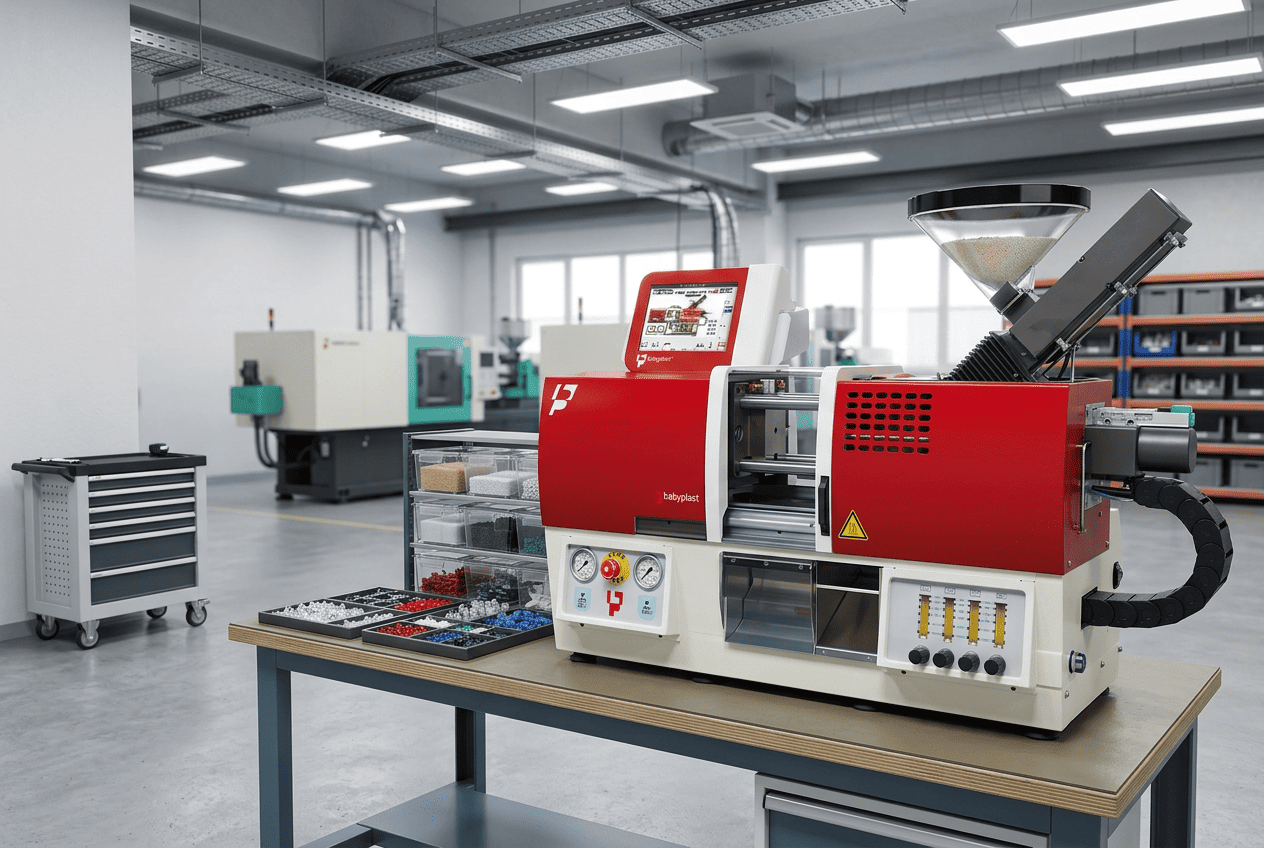
Multi-shot injection moulding uses more than one injection unit or injection stage to form a component. The first shot creates a substrate or core. The tool or component then changes position so that another material can be injected onto, around or through it.
The process is also described as two-shot, two-component or multi-component moulding. The exact terminology varies, but each method aims to combine operations and create an integrated part.
Multi-shot moulding can be considered when a finished component requires more than one material, colour or functional feature within a controlled production sequence.
How Does Multi-Shot Injection Moulding Work?
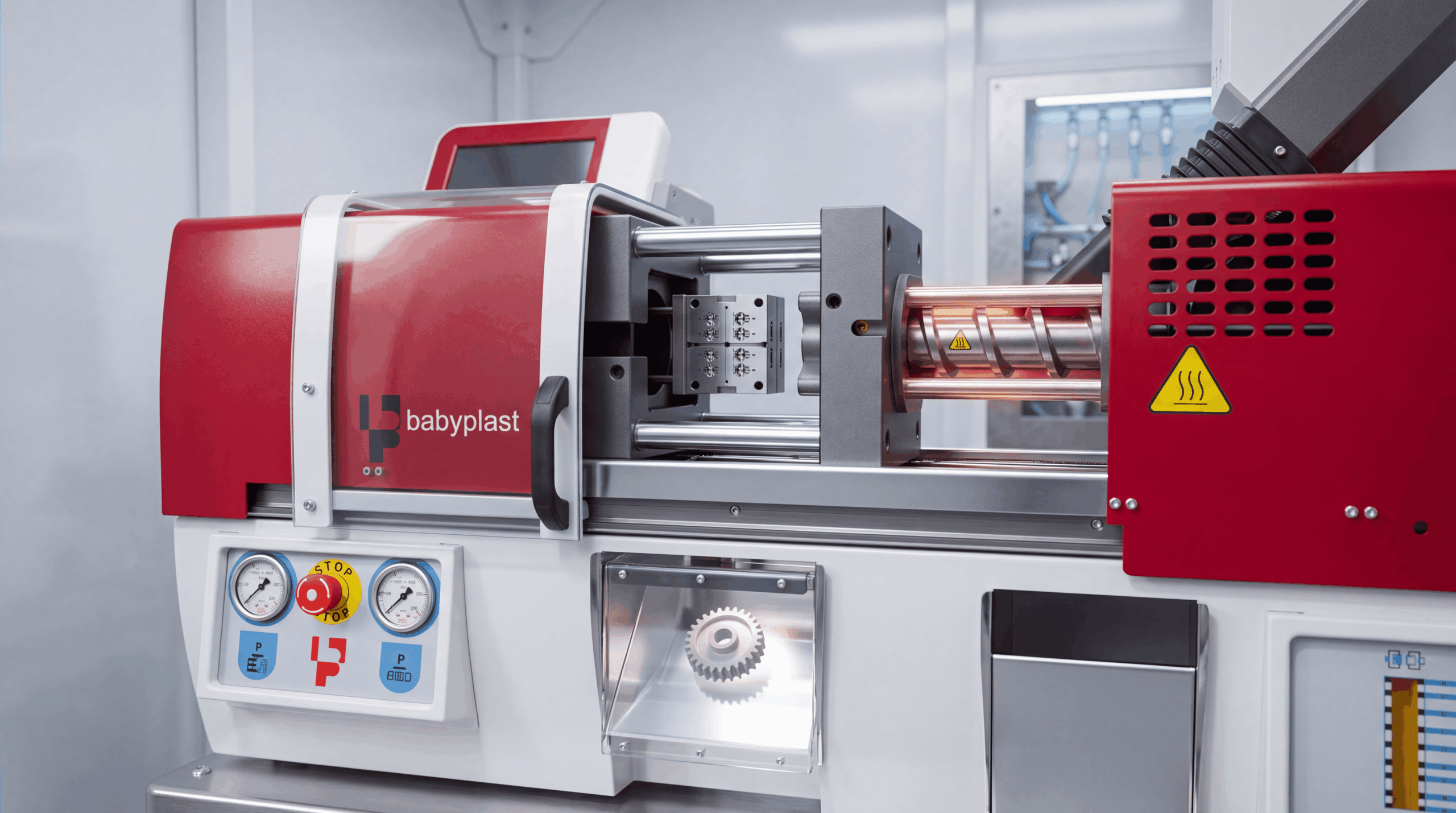
A typical two-shot injection moulding cycle involves producing an initial component section before adding a second material or colour. The movement between stages depends on the machine and tooling arrangement.
The Five Stages of a Two-Shot Moulding Cycle
- First injection: The mould closes and the first injection unit produces the initial section of the component.
- Initial cooling: The first shot cools sufficiently to retain its shape.
- Tool repositioning: The mould core, cavity or component moves into the second-shot position.
- Second injection: A second injection unit delivers the next material or colour.
- Final cooling and ejection: The completed component cools and is ejected from the mould.
Movement between injection stages may be provided by a rotary platen, index plate, core-back action, robot transfer or another tool mechanism.
The selected method depends on part geometry, cycle time and the alignment required between the different material sections.
What Can Multi-Shot Injection Moulding Produce?
Multi-shot moulding can be used to produce components that combine different materials, colours or functional properties.
Examples include:
- Rigid components with flexible sections: Parts incorporating flexible seals or grips alongside a rigid structure.
- Two-colour components: Products that require different colours within one moulded component.
- Integrated functional features: Components incorporating hinges, membranes or shock-absorbing areas.
- Electrical and medical components: Parts with functional overmoulded zones.
- Combined components: Products that would otherwise require adhesive bonding or mechanical assembly.
The suitability of multi-shot moulding depends on the component design, materials and the ability to coordinate the individual injection stages.
What Are the Benefits of Multi-Shot Injection Moulding?
Combining injection stages within one controlled manufacturing process can offer advantages over producing and assembling separate components.
Reduced Handling and Assembly
Multi-shot moulding can reduce work in progress, handling and assembly by combining material sections within the moulding process.
This can be particularly relevant where a finished component would otherwise require separate adhesive or mechanical joining operations.
Improved Positioning Between Materials
The relative positioning of different materials is controlled by the tool. This can improve repeatability when the finished component requires accurate alignment between its moulded sections.
Integrated Component Features
Multi-shot injection moulding can produce functional features that may be difficult to assemble economically after separate moulding operations.
Examples include rigid structures with flexible sealing areas or components containing different colours and materials.
What Makes Multi-Shot Injection Moulding More Complex?
Although multi-shot moulding can combine manufacturing operations, the process introduces additional tooling, material and control requirements.
Material Compatibility
The selected materials must be compatible with each other and with the temperature sequence used during moulding.
Material adhesion and the behaviour of the first shot during the second injection stage need to be considered during development.
Shot Size, Cooling and Shrinkage
Individual shot volumes, cooling requirements and material shrinkage need to be balanced to produce the intended component.
Both injection stages must be matched to the tooling and the materials being processed.
Tool Movement and Process Control
The moulding cell requires coordinated controls and guarding to ensure both injection units and the tool complete the correct production sequence.
Tool movement, component alignment and automation must all be considered when assessing the process.
When Is a Secondary Injection Unit Useful?
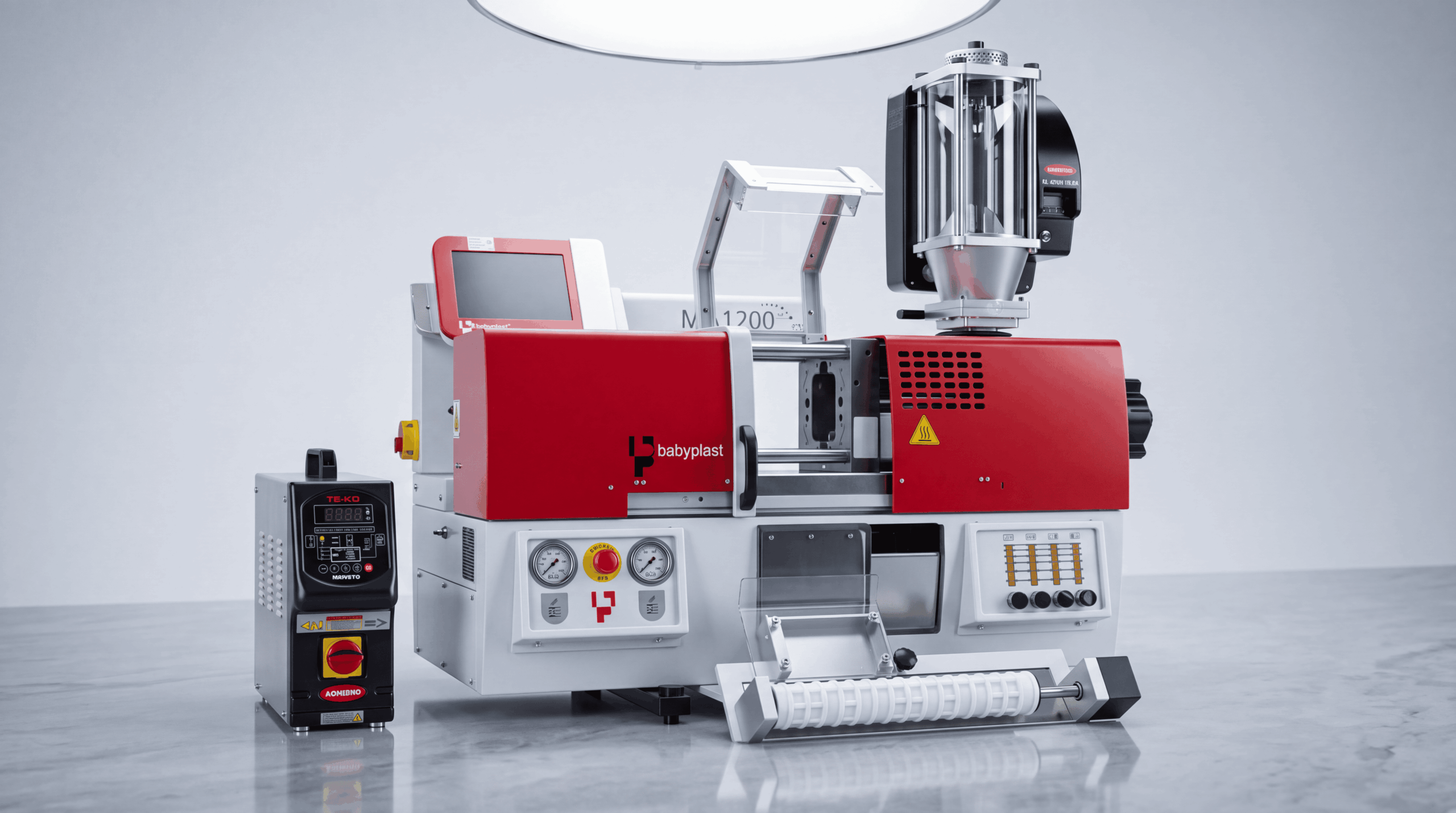
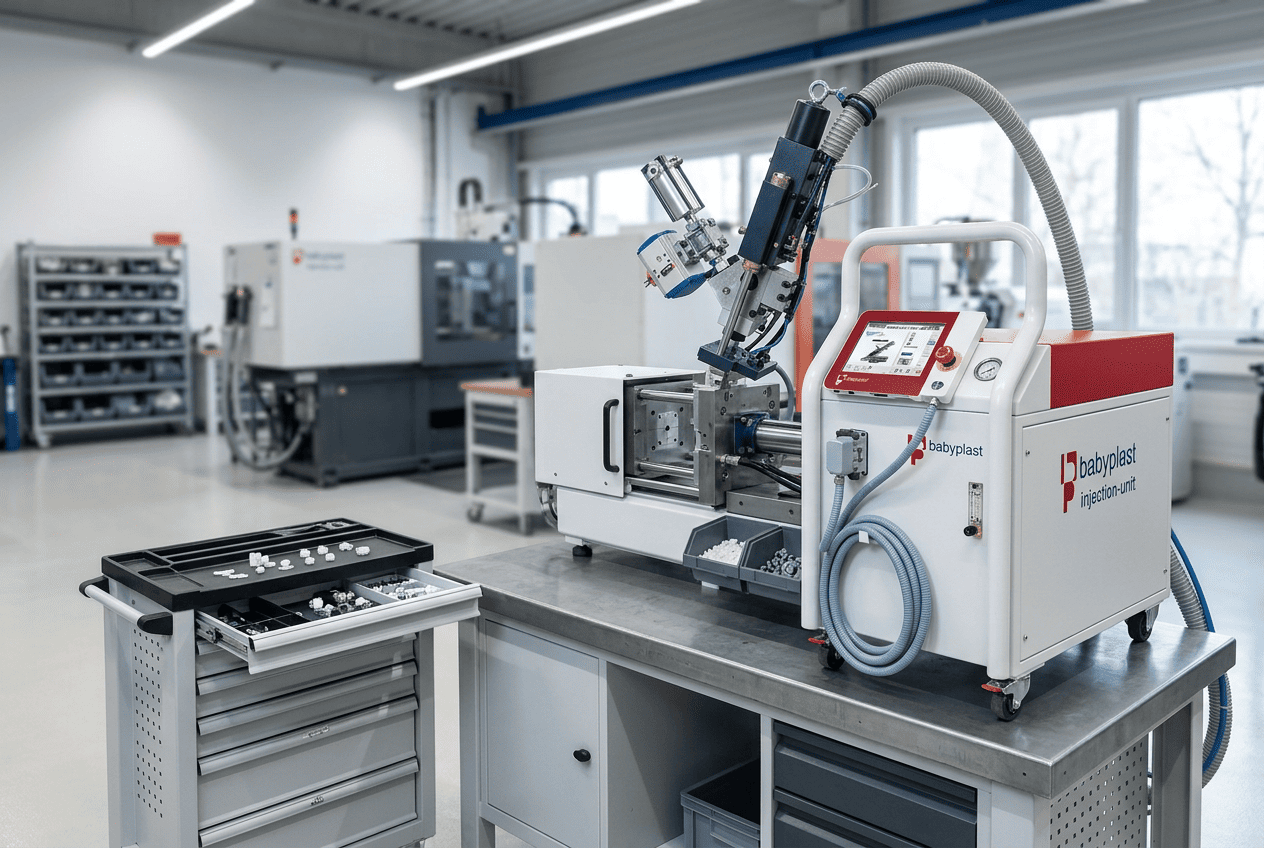
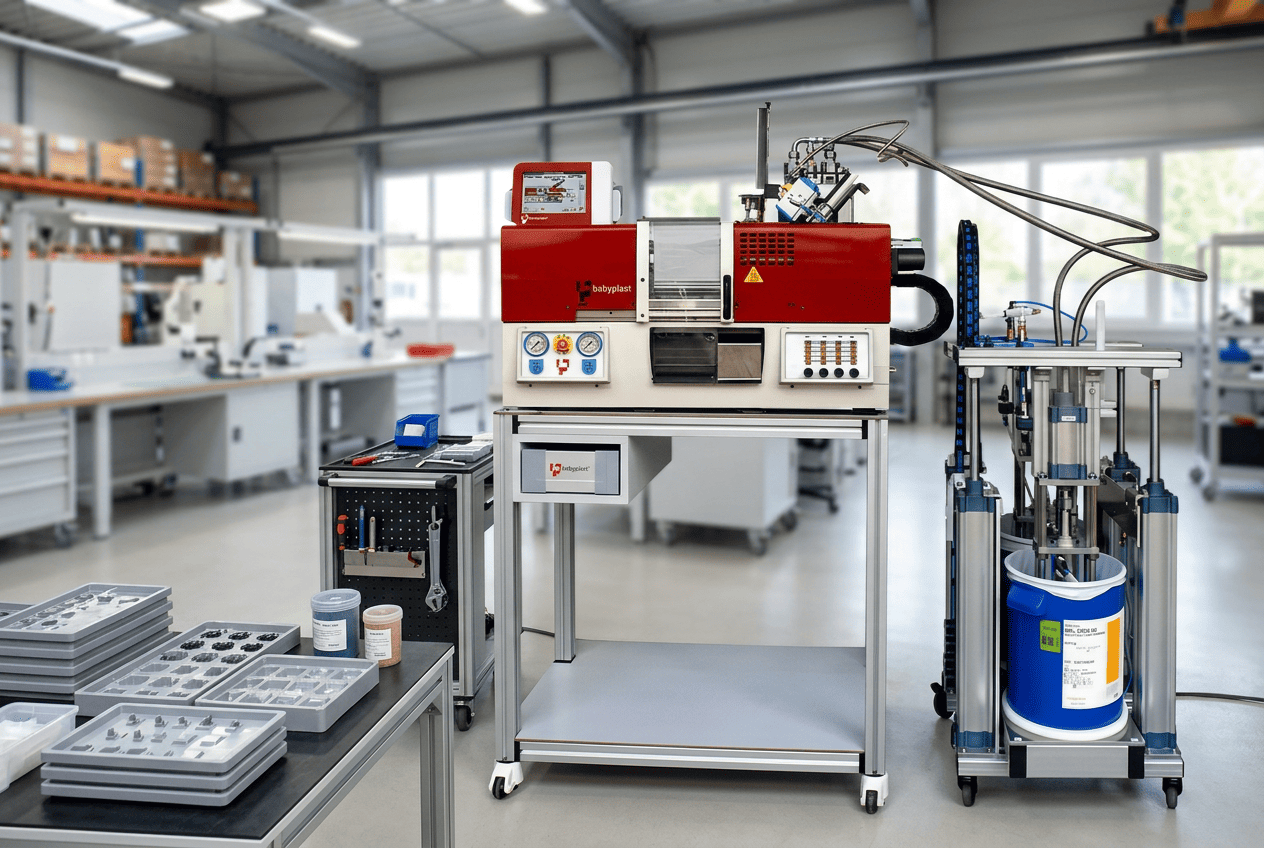
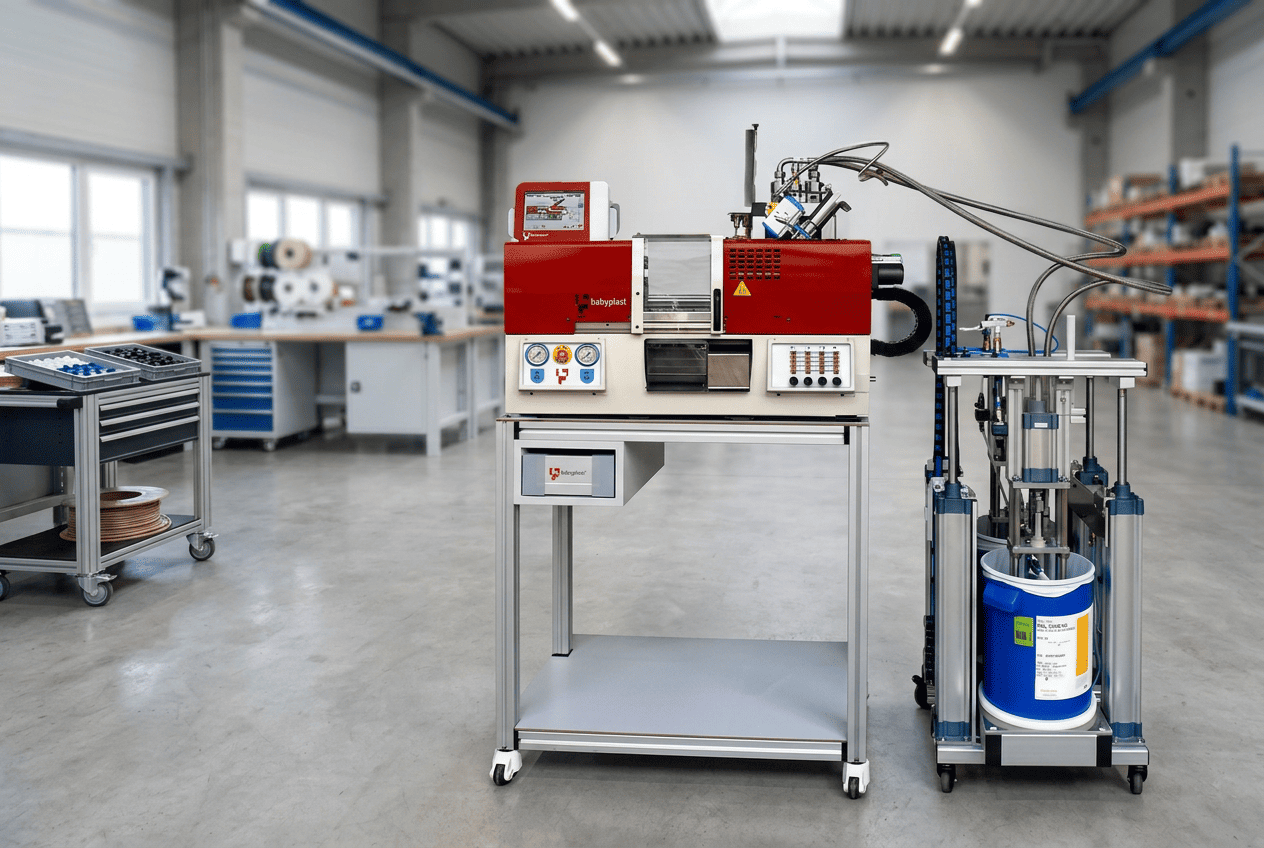
A secondary injection unit can add another controlled shot to a suitable machine or tool without replacing the main moulding platform.
This arrangement can be useful for development applications, compact production cells and specialist components requiring small secondary injection volumes.
Whether a secondary unit is appropriate depends on the existing machine, tooling arrangement, material requirements and intended production process.
Multi-Shot Moulding and Overmoulding
Multi-shot moulding and overmoulding are closely related processes. Multi-shot moulding describes the use of multiple injection stages, while overmoulding describes adding material onto or around an existing component or substrate.
An integrated multi-shot process can therefore be used to carry out certain overmoulding applications.
For more information about adding a second material to a component, read our guide to overmoulding and multi-material components.
Planning a Multi-Shot Injection Moulding Application
A multi-shot moulding project should be assessed around the complete production process, including both materials, individual shot volumes, tooling and the required level of automation.
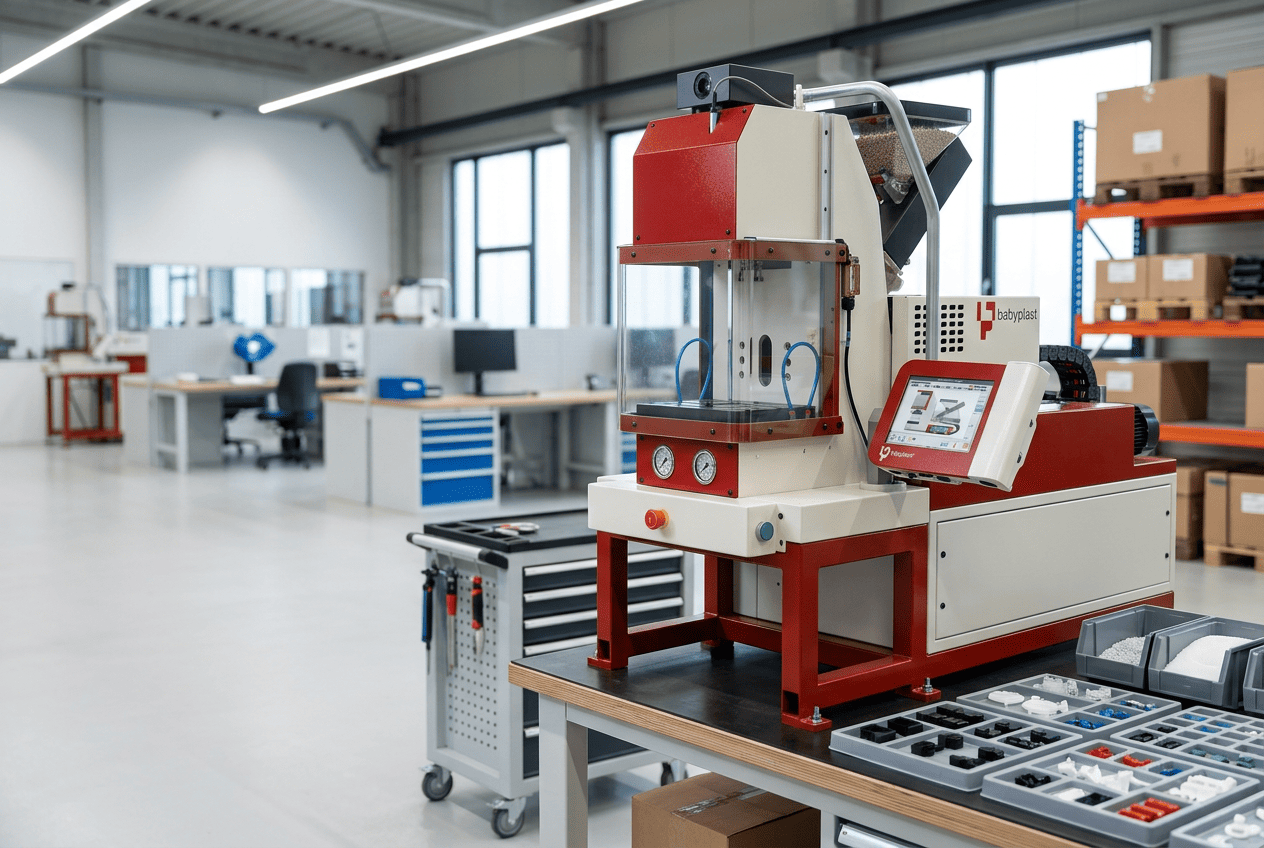
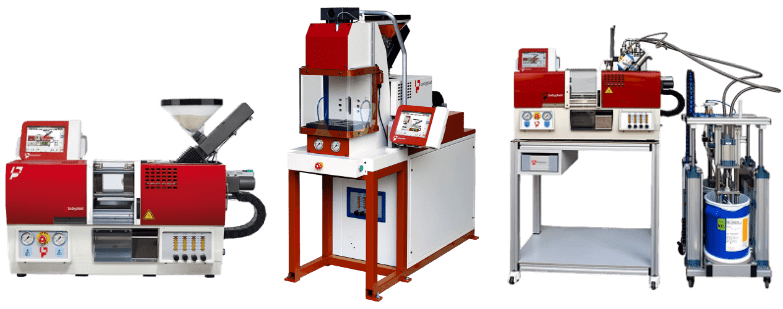
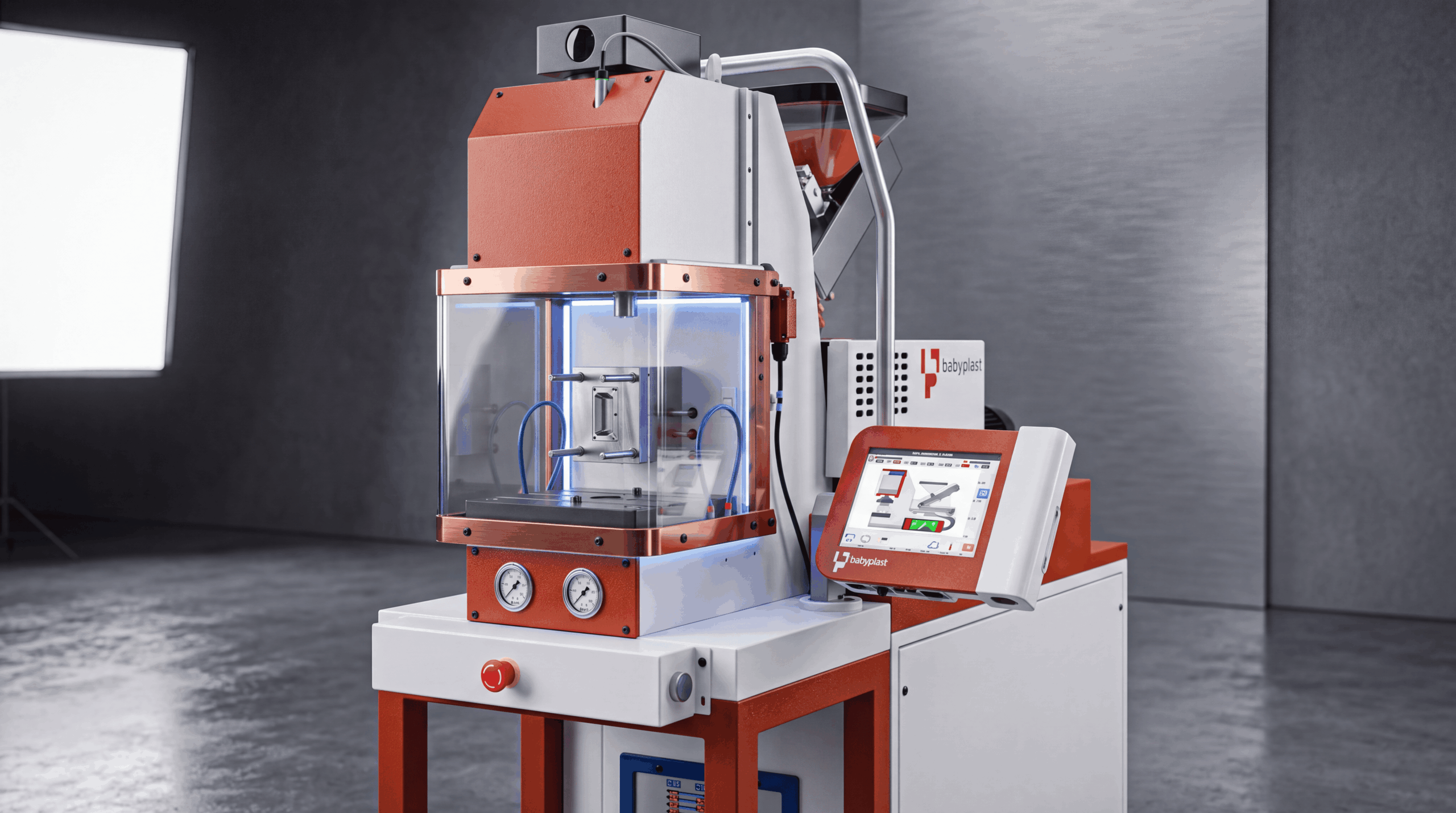
Babyplast UK supplies UAI secondary injection units for suitable multi-shot applications, including an LSR version.
A feasibility review should cover material compatibility, tool indexing, adhesion, cycle time and automation. Testing the concept before final tooling helps reduce technical and commercial risk.
Explore the Babyplast UAI secondary injection unit range to learn more about the available equipment for suitable multi-shot moulding applications.