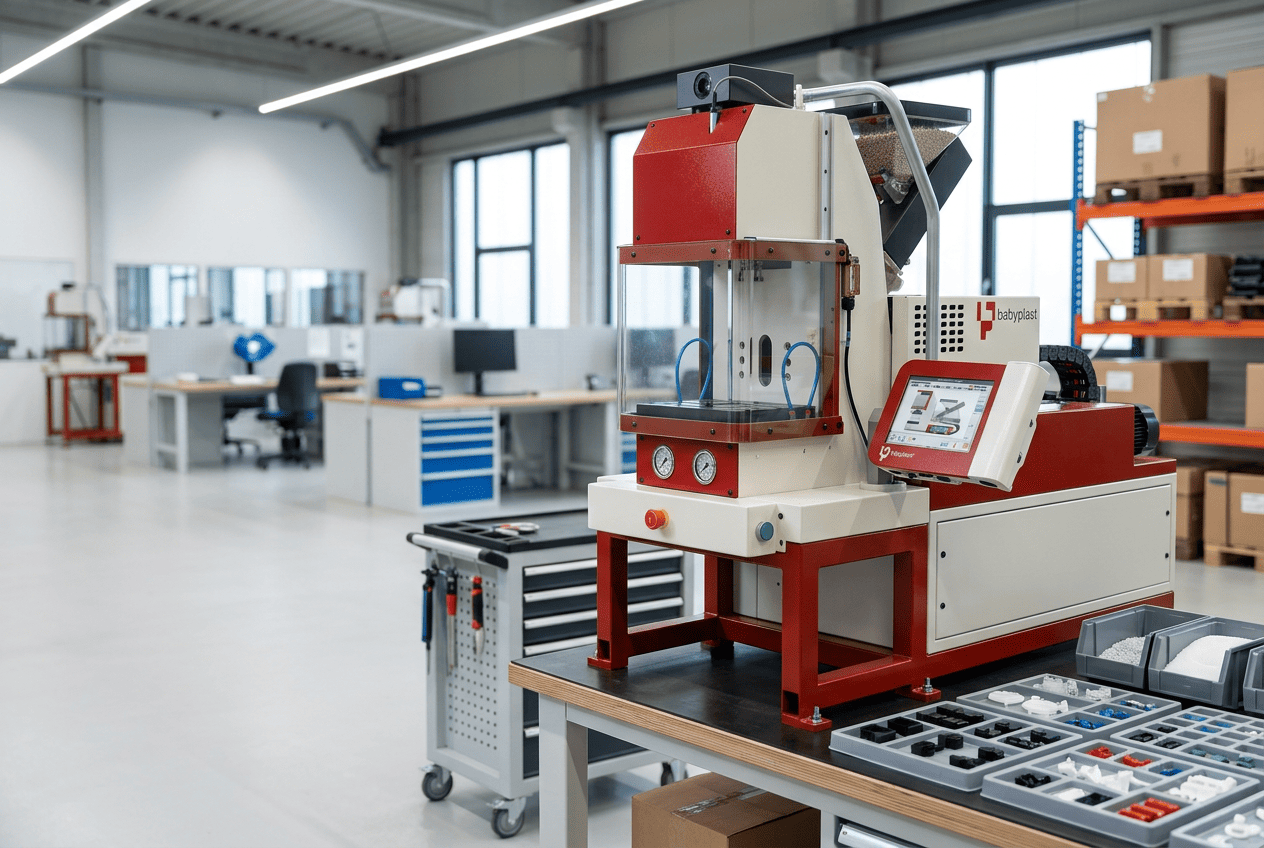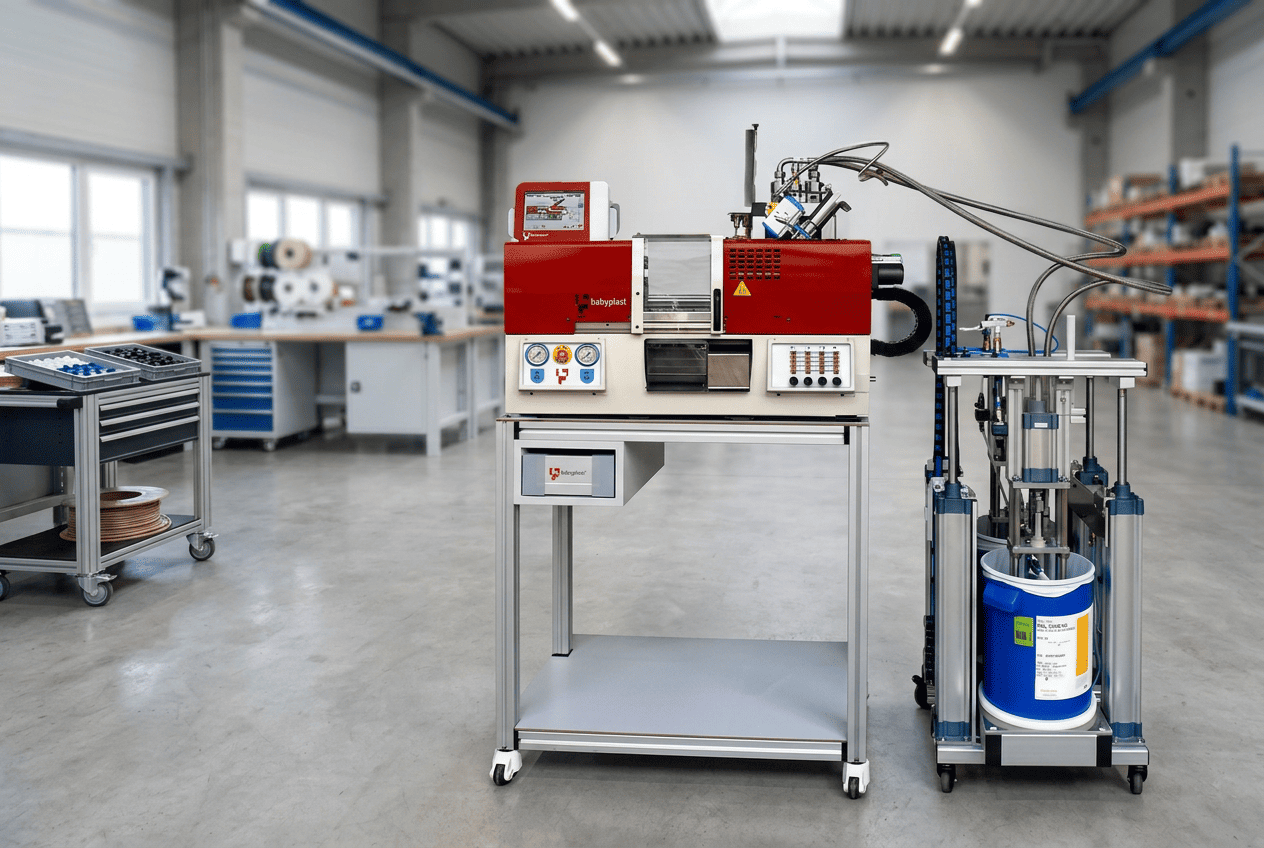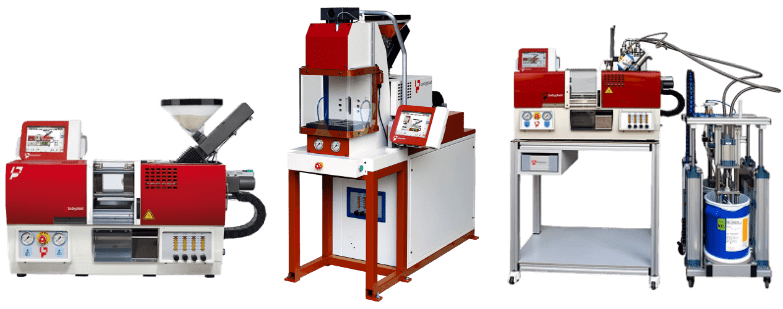
Where a compact machine with a single-phase electrical supply can simplify installation for small-part production.
Industrial injection moulding machines are commonly associated with three-phase electrical supplies and dedicated factory services. For suitable small-part applications, a compact single-phase injection moulding machine can make installation possible in locations where conventional infrastructure is limited.
However, electrical supply is only one consideration. The machine must also be suitable for the component, material, tooling and production requirements.
What Is a Single-Phase Injection Moulding Machine?
A single-phase injection moulding machine is designed to operate from a compatible single-phase electrical supply rather than the three-phase supply commonly used by larger industrial equipment.
This can provide an alternative installation option for suitable small-part manufacturing applications where a three-phase electrical connection is not readily available.
However, the exact voltage, current, plug, protection and connection requirements must still be confirmed before installation.
Where Can a Single-Phase Injection Moulding Machine Be Used?
A compact single-phase injection moulding machine can be considered in locations where the available electrical infrastructure or the nature of the manufacturing application makes conventional equipment less practical.
Potential applications include:
- Universities and colleges: Technical training facilities requiring suitable injection moulding equipment.
- Research laboratories: Research and development environments working with small precision components.
- Product development departments: Facilities producing prototypes or evaluating component designs.
- Small workshops: Manufacturing environments without convenient access to a three-phase connection.
- Dedicated production cells: Small-part manufacturing applications using appropriately sized components and tools.
Suitability depends on both the electrical installation and the technical requirements of the moulding process.
What Are the Installation Benefits of Single-Phase Injection Moulding?
The main installation advantage of a single-phase injection moulding machine is the potential to use an available compatible electrical supply.
Where suitable infrastructure already exists, this can reduce the electrical work involved in installing the equipment.
It may also make the machine easier to relocate within a facility, subject to the services and installation requirements at the new location.
Does a Single-Phase Machine Work from an Ordinary Socket?
A single-phase electrical supply does not automatically mean that an injection moulding machine can be connected to any ordinary socket.
The available supply and connection arrangements must be assessed against the requirements of the specific machine.
A qualified person should confirm:
- Electrical supply capacity.
- Required voltage and current.
- Protective devices and electrical protection.
- Isolation arrangements.
- Earthing requirements.
- Applicable local electrical requirements.
These checks should be completed before installation.
What Other Services Are Required?
Electrical power is only one part of the installation plan for an injection moulding machine.
Cooling water, compressed air, extraction and ancillary equipment must also be considered where required by the selected machine and process.
The complete production cell should be assessed to confirm that suitable services and operating conditions are available.
Are Single-Phase Injection Moulding Machines Only Used for Prototyping?
No. The type of electrical supply does not determine whether an injection moulding machine can be used for production.
A single-phase machine can be considered for development or production when the application fits within its operating capabilities.
Suitability depends on several factors, including:
- Clamping force: The force required for the moulding operation.
- Shot volume: The amount of material needed for the component and associated tooling.
- Tool size: The dimensions and requirements of the mould.
- Process stability: The ability to maintain the required moulding conditions.
- Cycle time: The time required to complete each production cycle.
- Production duty: The intended operating hours and requirements of the complete production cell.
The machine should therefore be selected according to the manufacturing application rather than the electrical supply alone.
What Are the Limitations of a Single-Phase Injection Moulding Machine?
A compact single-phase injection moulding machine is designed for an appropriate range of small components, tools and shot volumes.
It cannot automatically replace a larger injection moulding press where the manufacturing application requires greater machine capacity.
Clamping Force and Injection Volume
The machine must provide sufficient clamping force and injection capacity for the intended component and tooling.
Applications requiring greater clamping force or larger injection volumes may fall outside the machine’s operating capabilities.
Tooling Dimensions and Platen Area
The mould must fit within the machine’s available tooling dimensions and platen arrangement.
A compact machine may not be suitable where the tool requires greater platen area or different opening and handling capabilities.
Automation and Production Cell Requirements
Automation space and the overall production arrangement must also be considered.
Even where the component is small, the complete cell may require additional handling equipment or services that influence machine selection.
The application must be checked against the relevant machine specification before a decision is made.
The Babyplast 6/12 Single-Phase Injection Moulding Machine
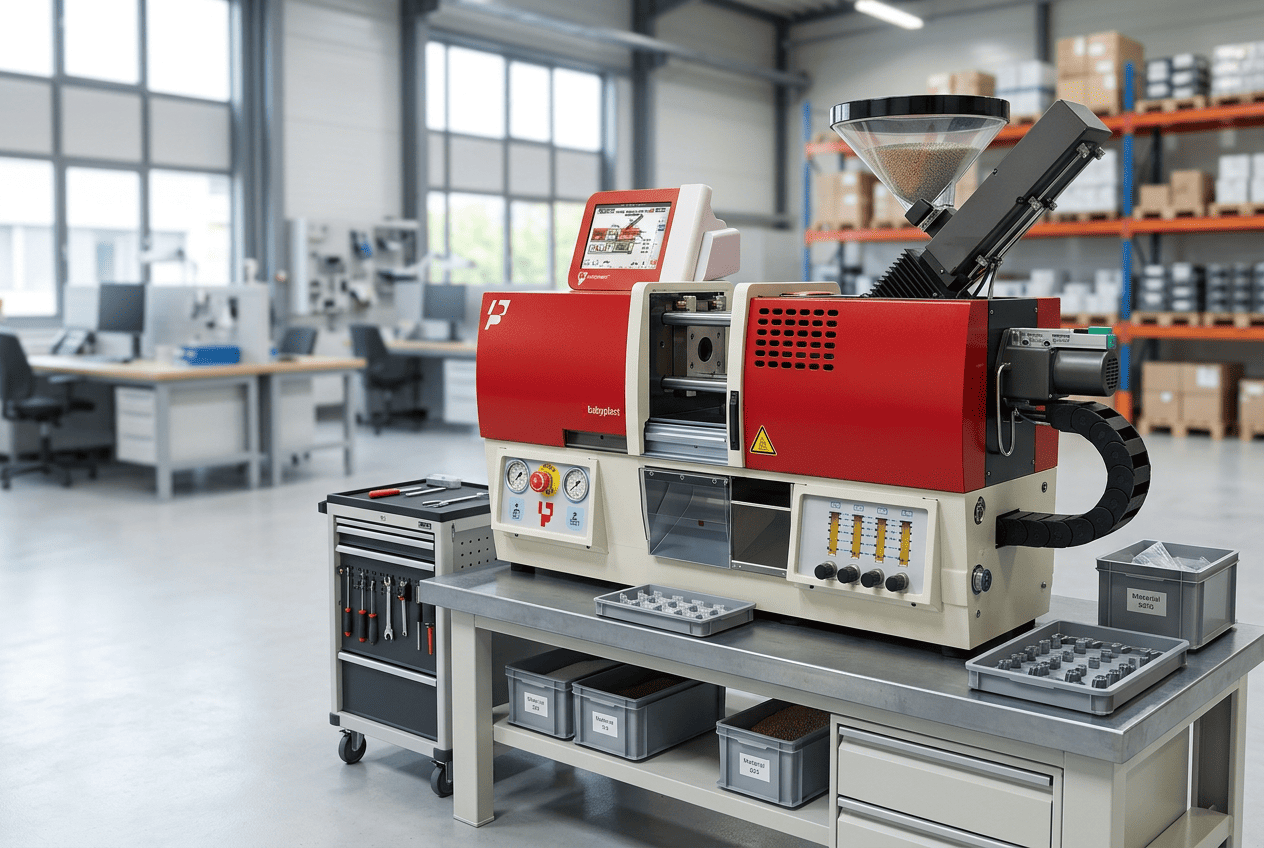
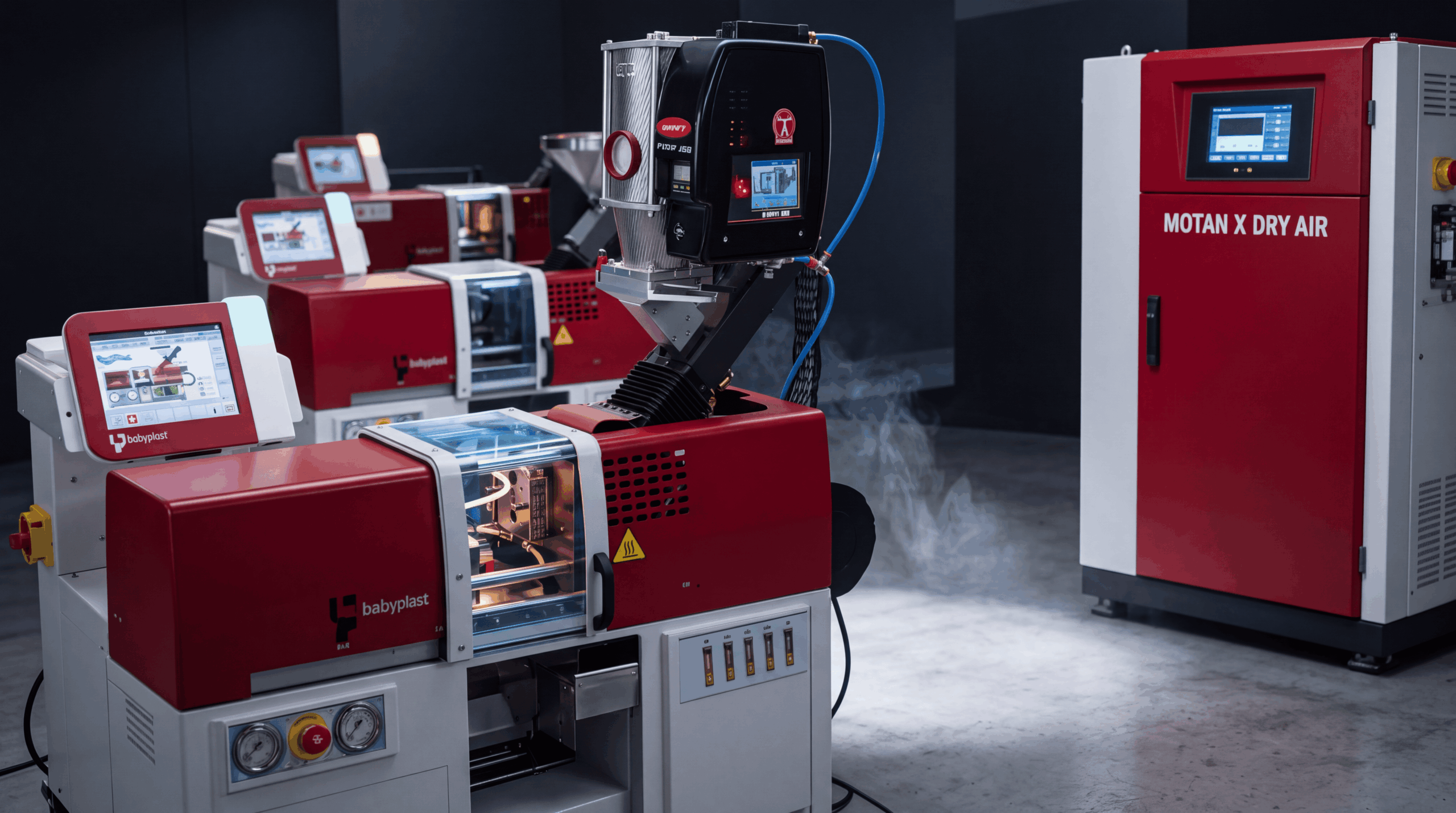
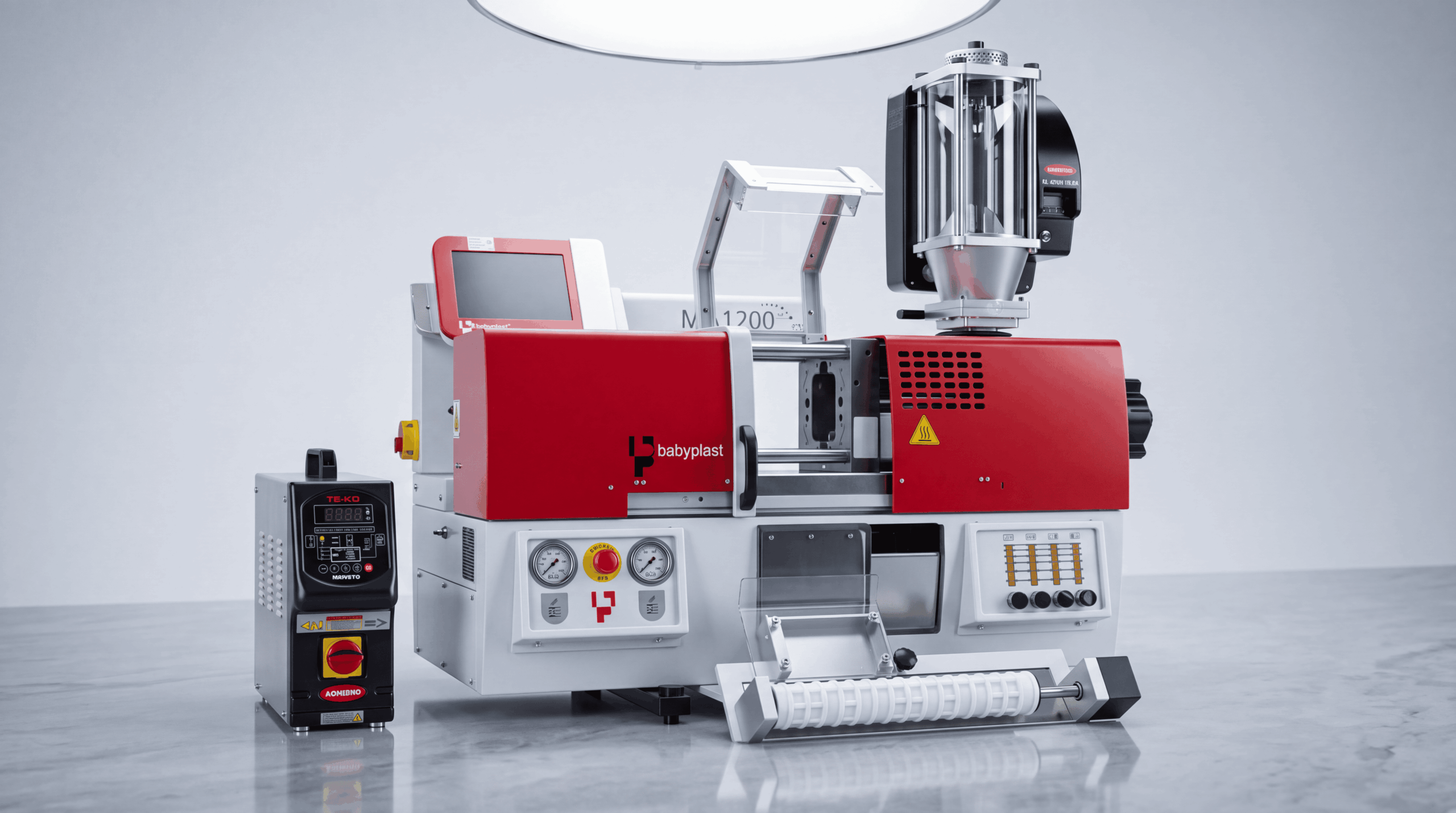
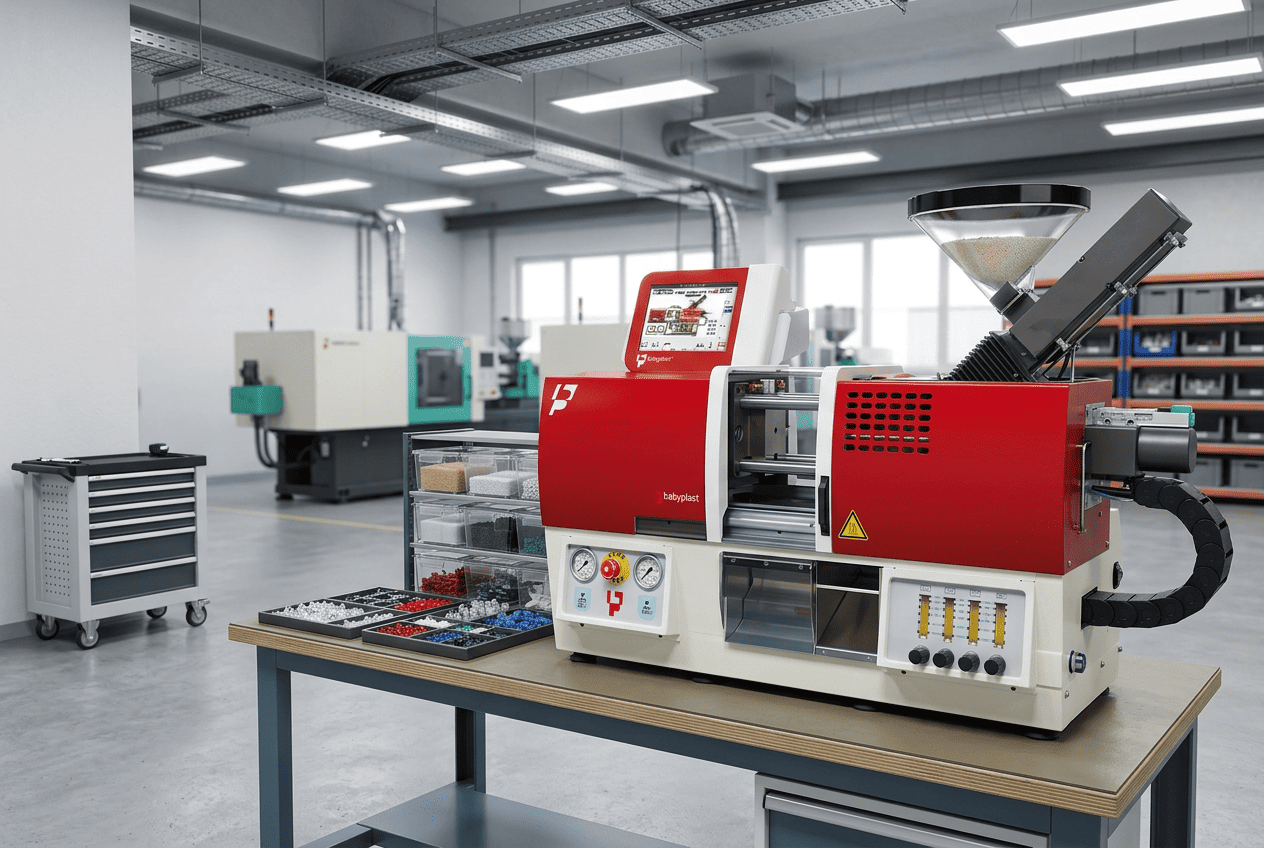
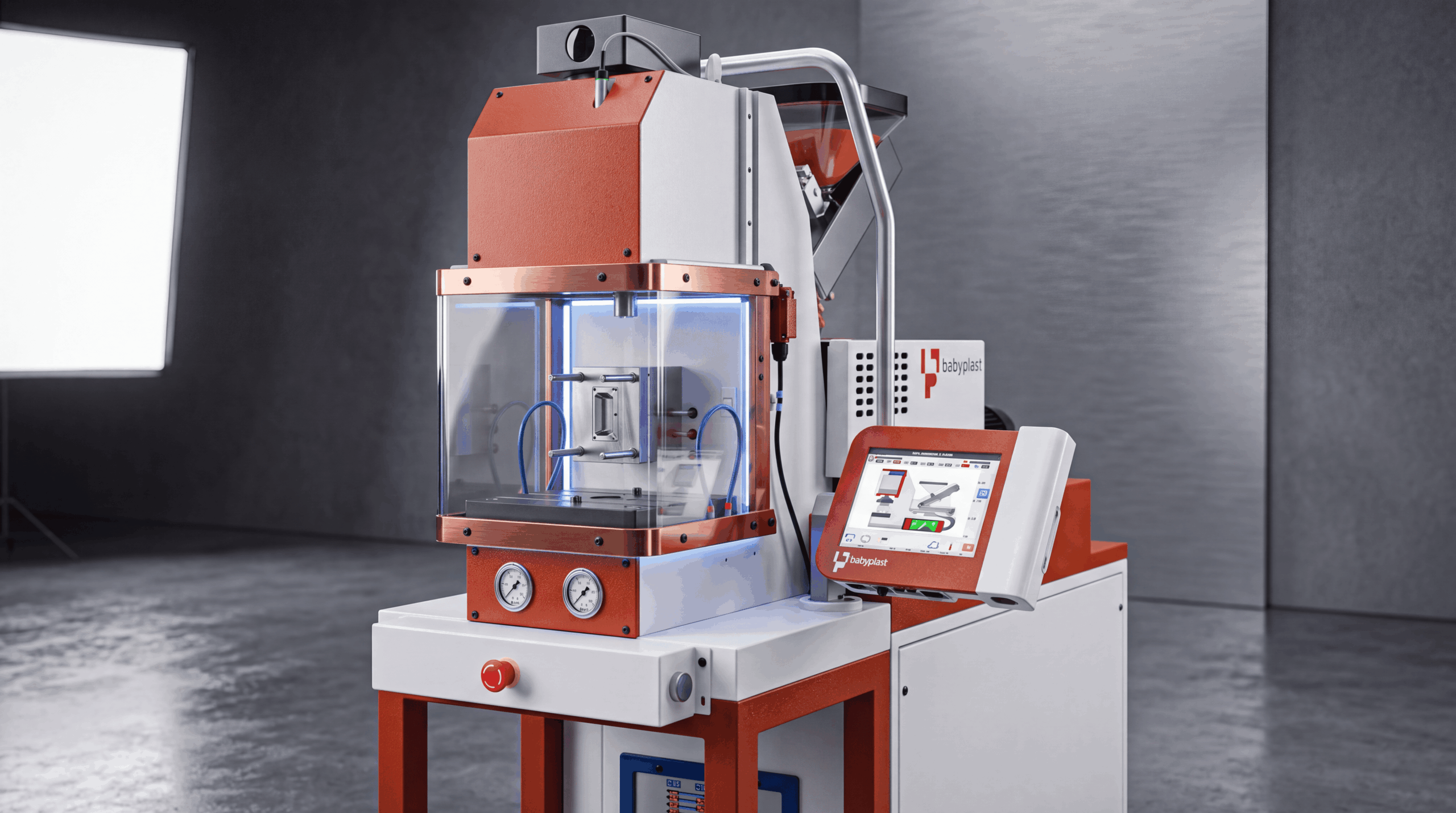
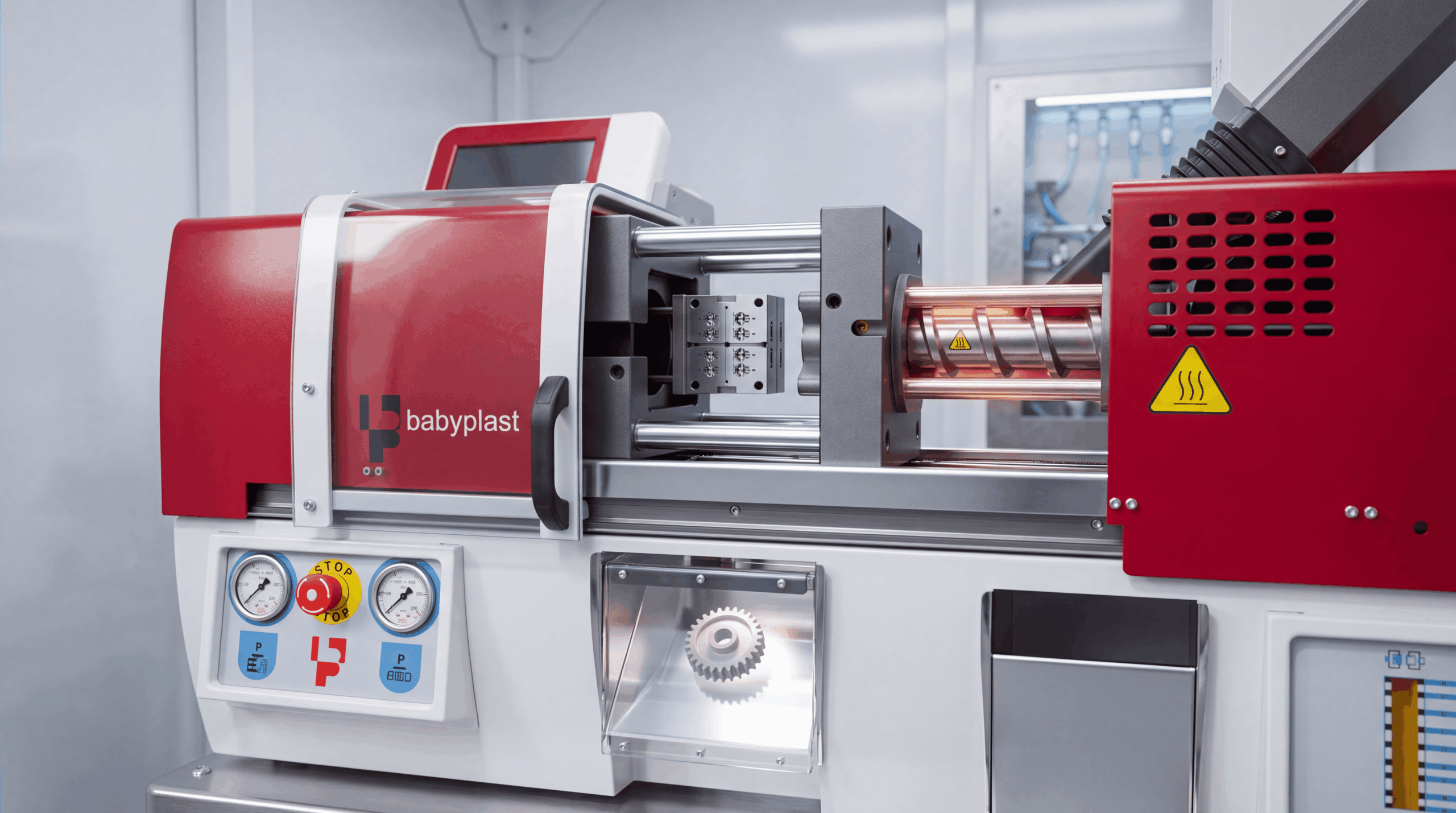
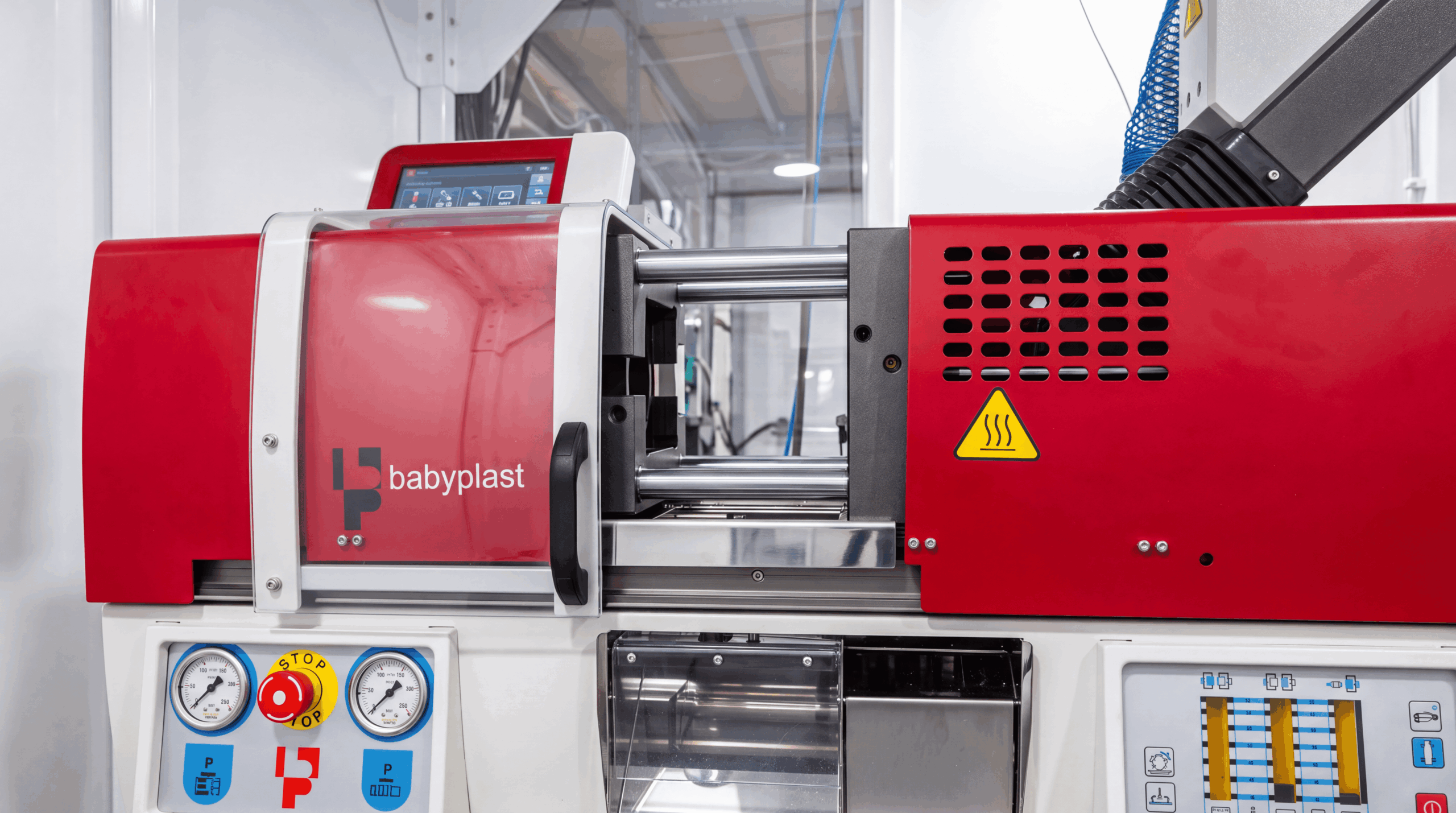
Babyplast UK offers a single-phase version of the compact 6/12 horizontal injection moulding machine.
The platform is intended for precision small-part moulding and can be considered for development or production applications when the component, tooling and process fit its operating capabilities.
Babyplast 6/12 Single-Phase Specifications
The official model specification referenced in the supplied technical information lists the following:
- Clamping force: 6 tonnes.
- Injection volume: Approximately 4.7 to 15 cubic centimetres, depending on piston selection.
- Installed power: Up to approximately 3 kW.
- Machine footprint: Less than 0.6 square metres.
These figures describe the machine itself and do not represent the total installation space required for the complete production cell.
Planning the Full Installation Footprint
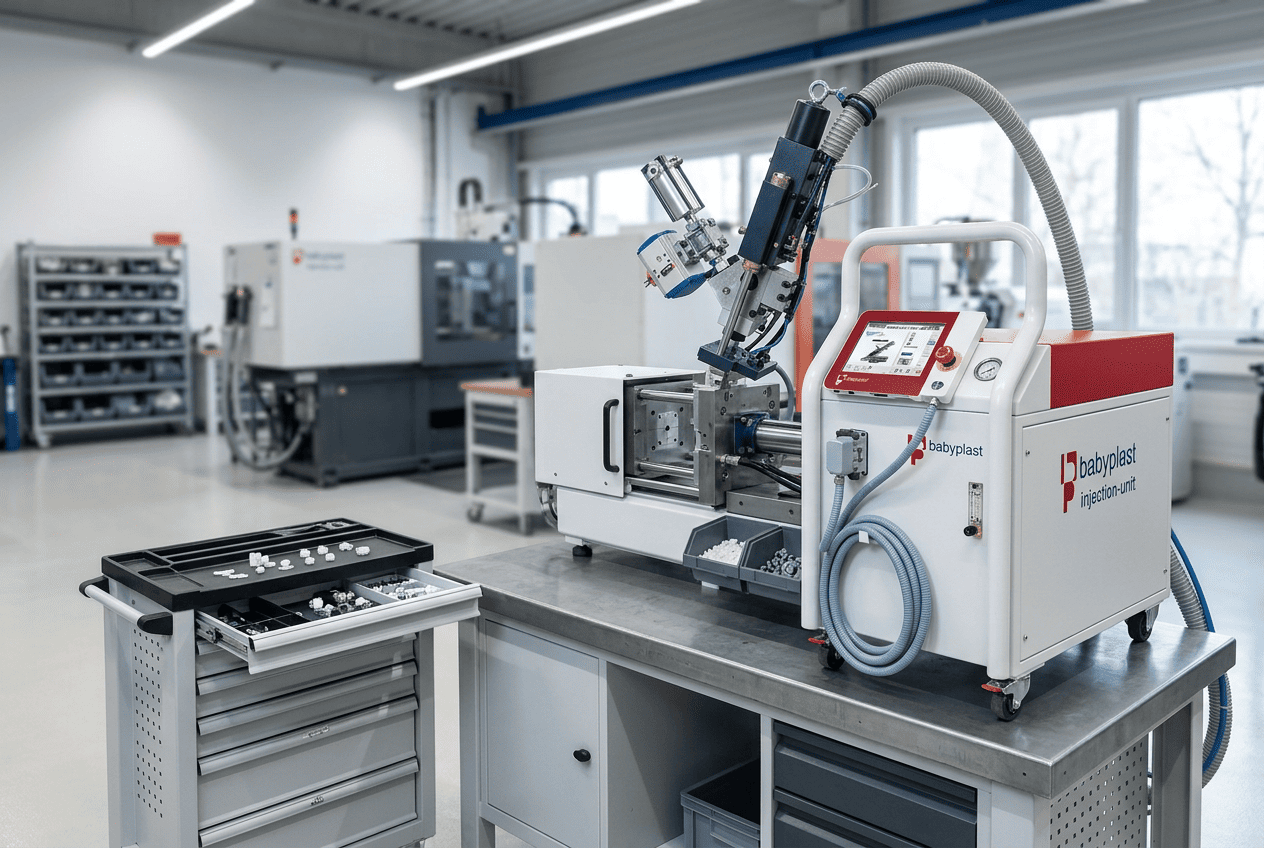
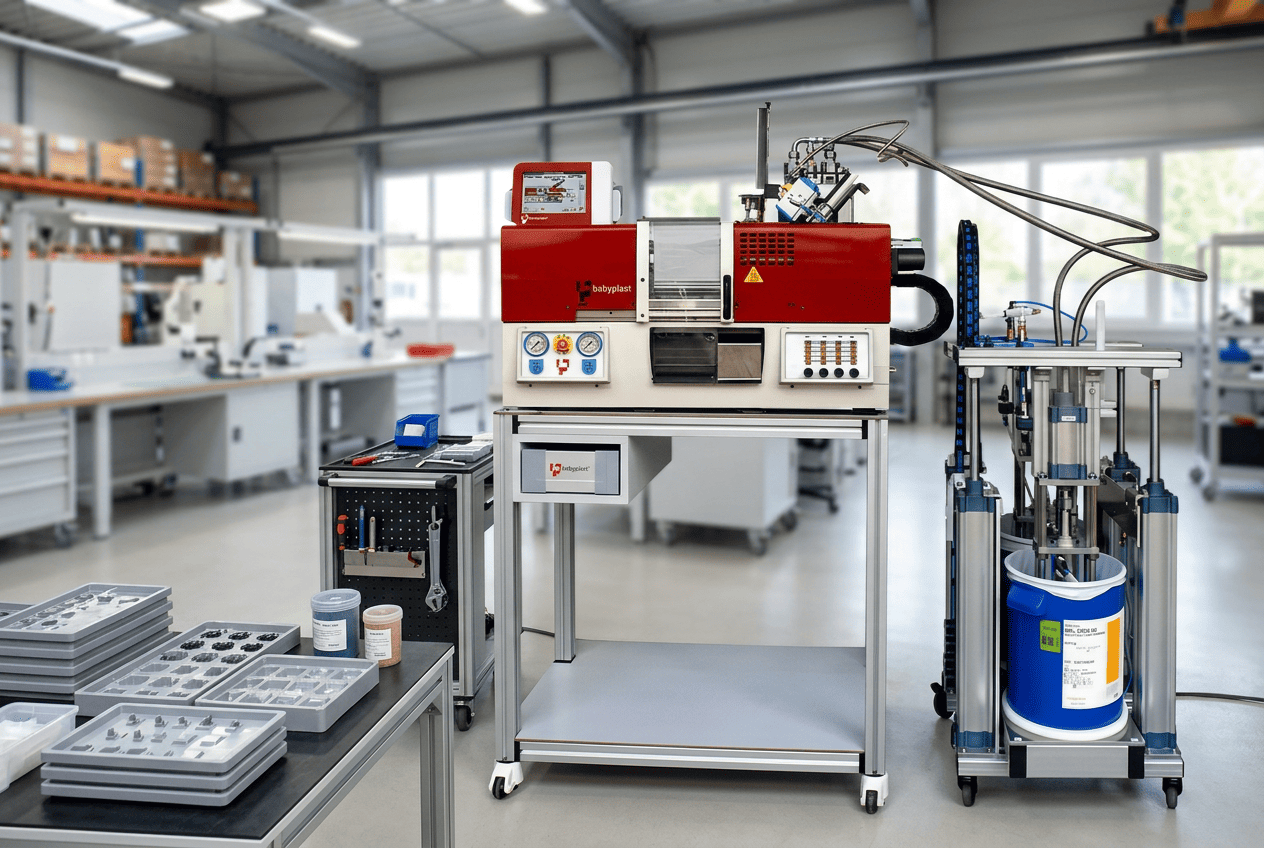
Although the compact 6/12 platform occupies less than 0.6 square metres, the installation must allow for the full guarded cell and appropriate working clearances.
Operator access, material handling, auxiliary equipment and services should all be considered when planning the final layout.
What Should Be Checked Before Buying a Single-Phase Injection Moulding Machine?
Before selecting a machine, the component and manufacturing requirements should be assessed against the equipment specification and the available installation infrastructure.
Important checks include:
- Part and shot volume: Confirm the material volume required for the finished component, including runner and sprue.
- Material processing: Check the required injection pressure and material processing temperature.
- Mould requirements: Review mould dimensions, clamping force and opening requirements.
- Electrical installation: Confirm supply capacity and the appropriate connection method.
- Supporting services: Assess cooling, compressed air and ancillary equipment requirements.
- Production requirements: Consider expected operating hours, automation and quality controls.
These considerations help establish whether the compact single-phase machine is suitable for the complete moulding application.
Single-Phase vs Three-Phase Injection Moulding Machines
The distinction between single-phase and three-phase injection moulding machines relates to their electrical supply requirements.
Larger industrial injection moulding equipment is commonly associated with three-phase power, while suitable compact machines may be designed to operate from a single-phase supply.
However, the electrical supply arrangement should not be used as the only basis for machine selection.
The required clamping force, shot volume, tooling, process stability and production duty remain central to determining which equipment is appropriate.
A Practical Route into Micro Injection Moulding
A single-phase injection moulding machine can remove an infrastructure barrier for certain small-part applications, but the process must still be engineered correctly.
The machine, material, mould tool and installation conditions need to be considered together.
Babyplast UK can assess the part, polymer, mould concept and installation location and arrange a production trial to confirm suitability.
Explore the Babyplast 6/12 Standard Single-Phase Series to learn more about the available compact injection moulding platform.