Why a smaller production platform can improve space use, material control and the economics of precision parts.
A smaller component does not always need a conventional full-size injection moulding cell. When the shot, tool and clamping requirement are modest, a compact injection moulding machine can provide a more proportionate production platform.
Compact injection moulding machines are designed around the requirements of smaller components and tools. Their suitability depends on the application, but they can offer practical benefits for factory space, material processing, tooling and dedicated small-part production.
What Are the Benefits of a Compact Injection Moulding Machine?
Choosing a compact injection moulding machine can offer advantages where the component, shot volume and tooling requirements fall within the machine’s operating capabilities.
The following five benefits explain why a smaller production platform may be appropriate for precision injection moulding applications.
1. Better Use of Factory Space
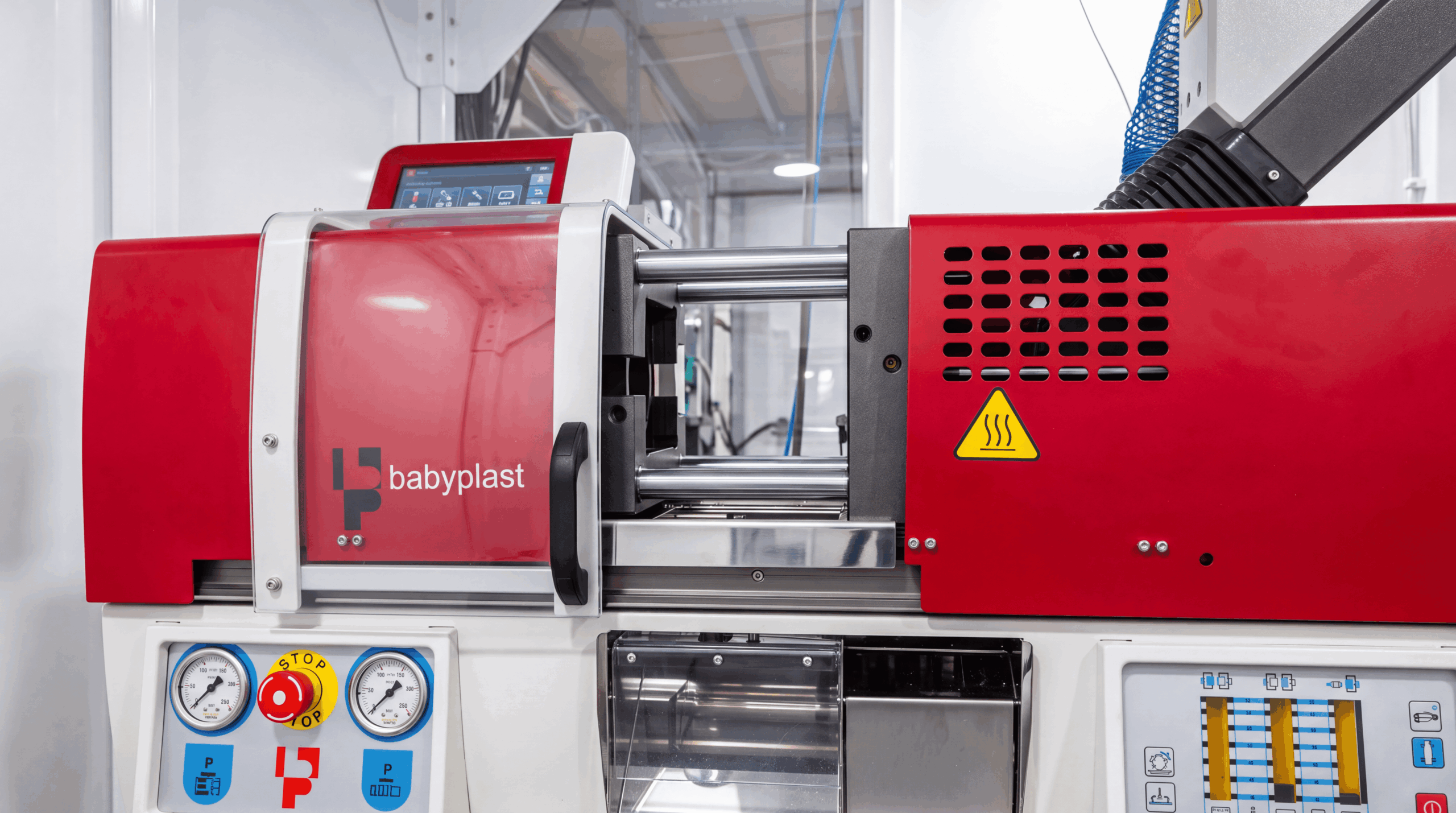
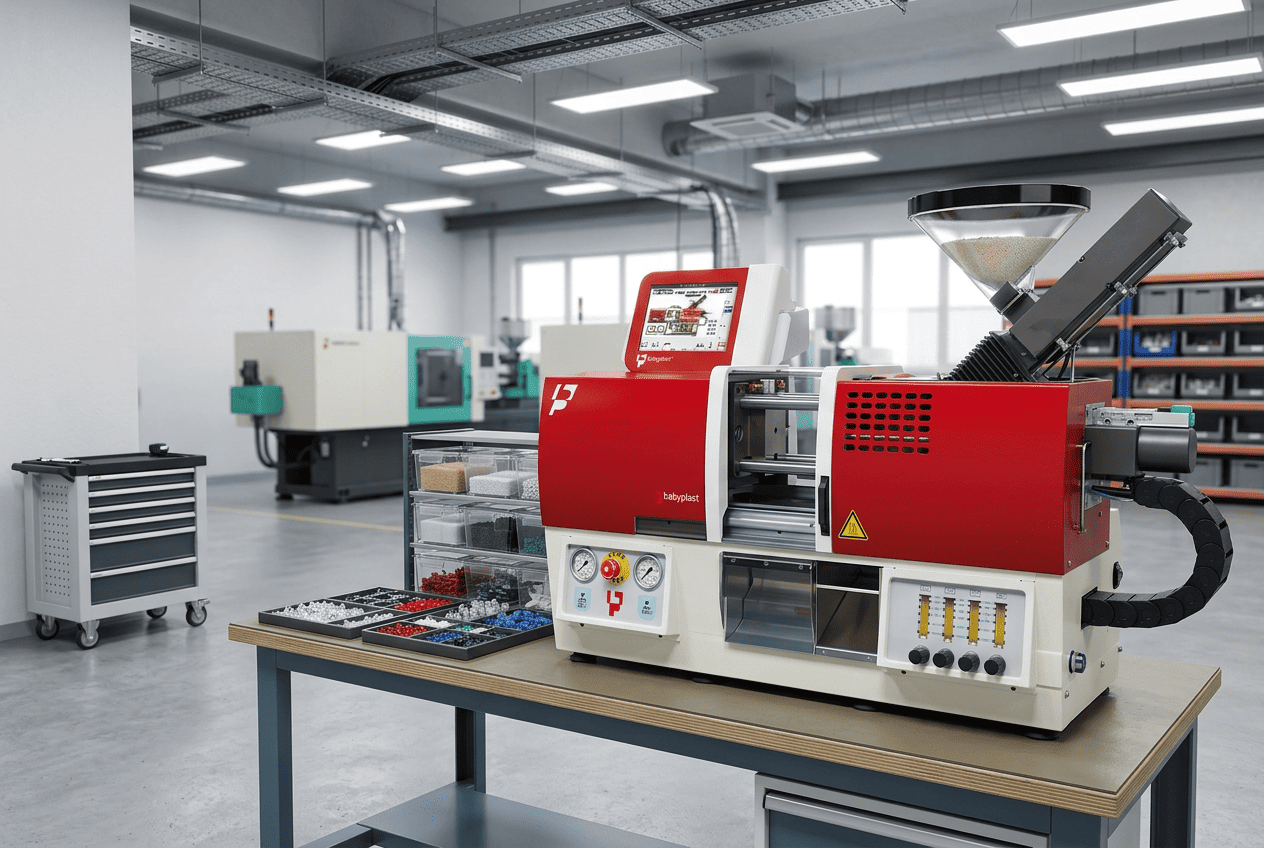
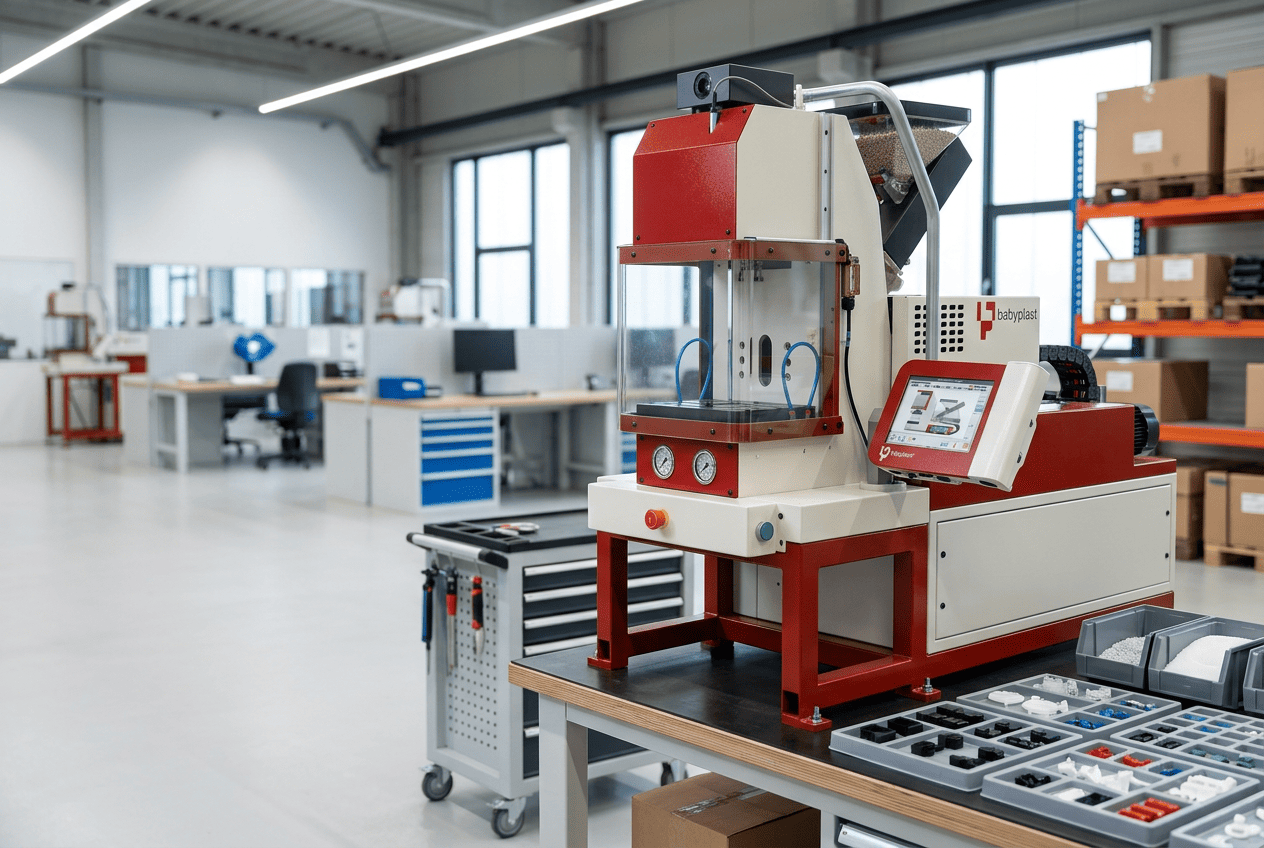
One of the main advantages of a compact injection moulding machine is its smaller physical footprint compared with equipment designed for much larger tools and components.
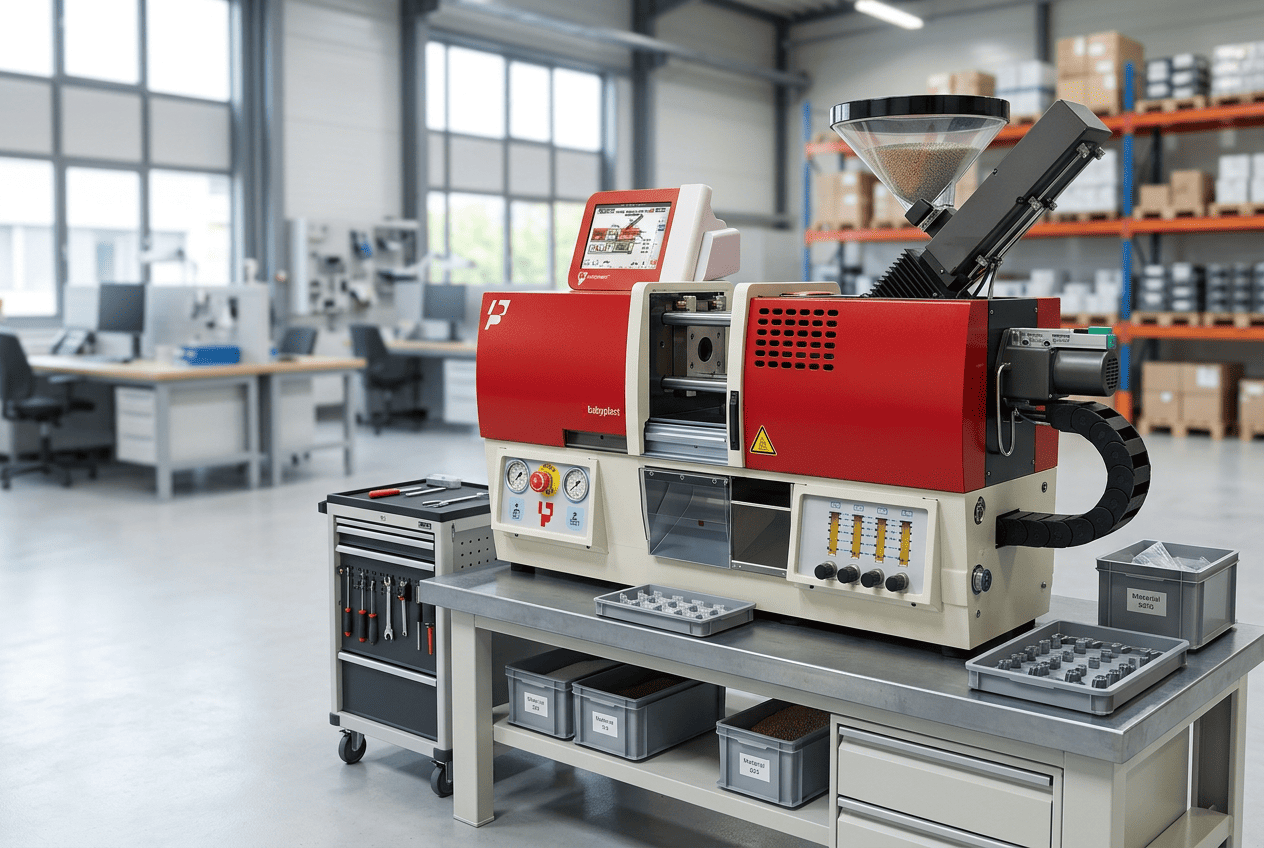
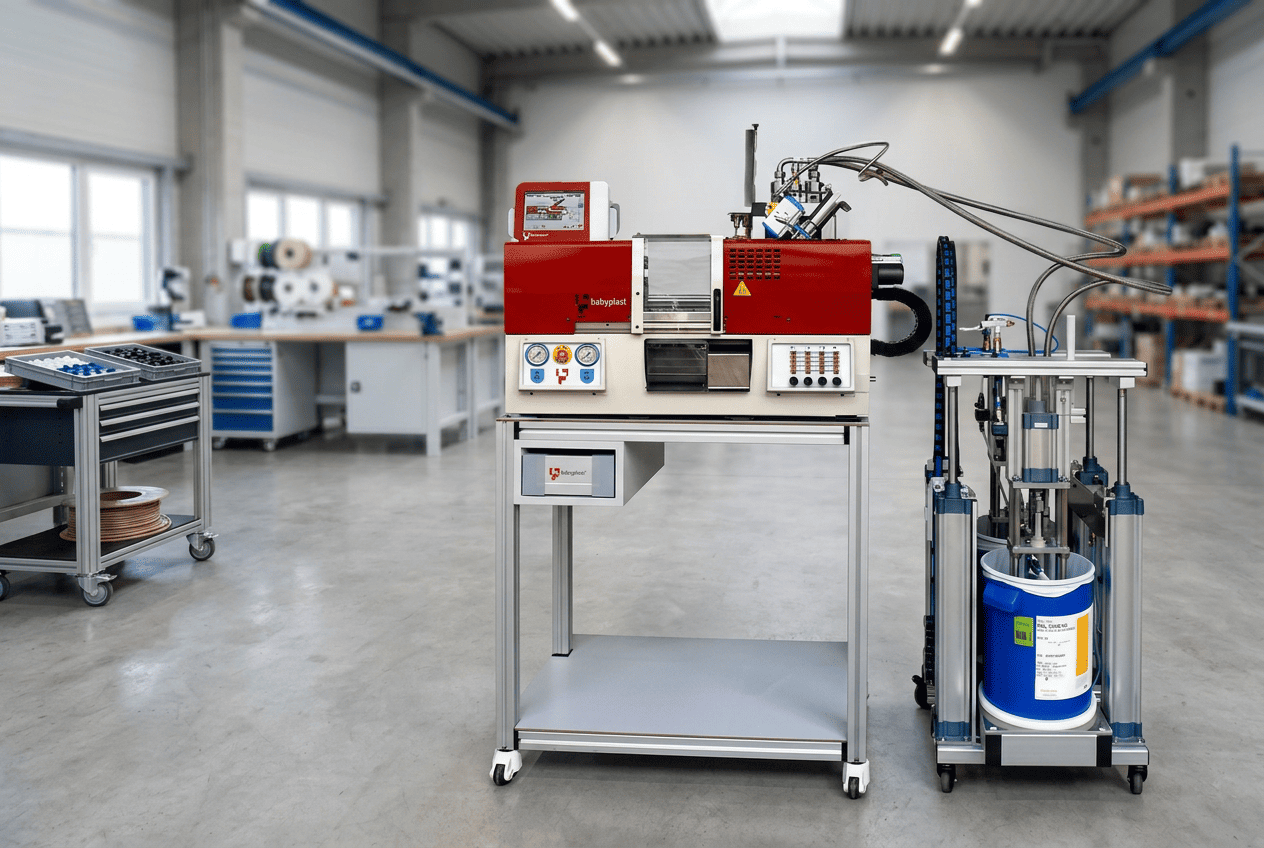
Compact machines occupy less floor space and can be installed in laboratories, development areas or dense production layouts.
Babyplast describes its horizontal 6/12 platform as occupying less than 0.6 square metres.
Planning the Complete Production Cell
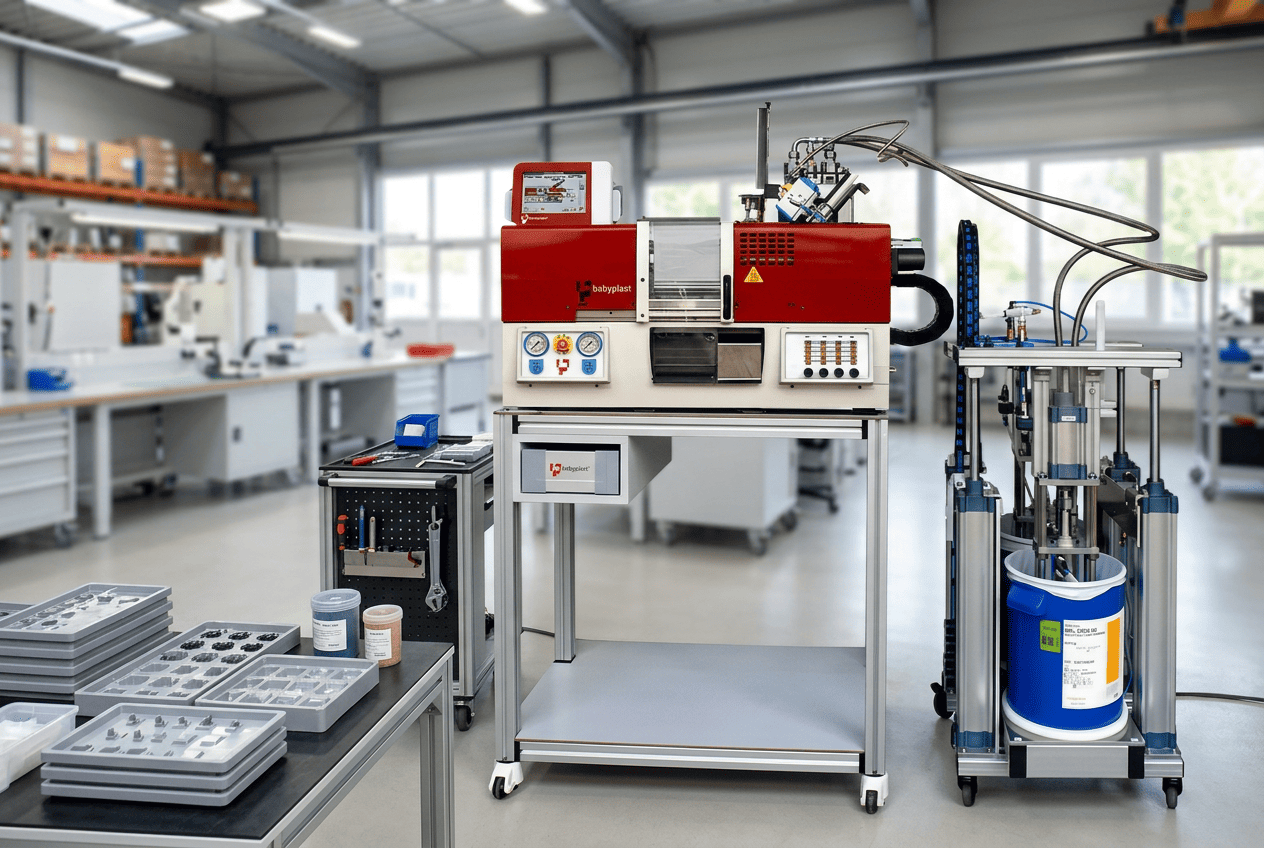
Although the machine itself may occupy a small area, the complete production cell requires additional space.
Installation planning must also account for operator access, guarding, material handling and the services needed to support the manufacturing process.
The overall production cell should therefore be assessed rather than considering the machine footprint alone.
2. Injection Capacity Suited to Small Shots
A compact injection moulding machine can provide an injection unit sized more closely to the requirements of small components.
An injection unit designed for a small shot can provide better use of its available stroke and reduce unnecessary material residence.
This helps the process focus on the volume actually required by the part, runner and sprue.
Why Is Shot Size Important?
The relationship between injection capacity and component size is important when manufacturing precision small parts.
A machine with a much larger injection capacity than the application requires may not provide the most appropriate material residence time or injection control.
However, correct sizing remains essential in both directions. A machine can be too small as well as too large.
Peak injection pressure, shot volume and material behaviour must all be verified before selecting the equipment.
3. Lower Installed Power
A compact clamp and injection system generally requires less installed power than equipment designed for much larger moulds and shot volumes.
The Babyplast 6/12 is rated up to approximately 3 kW, depending on the model and configuration.
Installed Power vs Actual Energy Consumption
Installed power should not be confused with actual energy consumption during production.
The amount of energy used will vary according to the moulding process and any auxiliary equipment required by the production cell.
When assessing a compact injection moulding machine, the complete equipment arrangement and intended operating conditions should be considered.
4. Smaller, More Focused Injection Mould Tooling
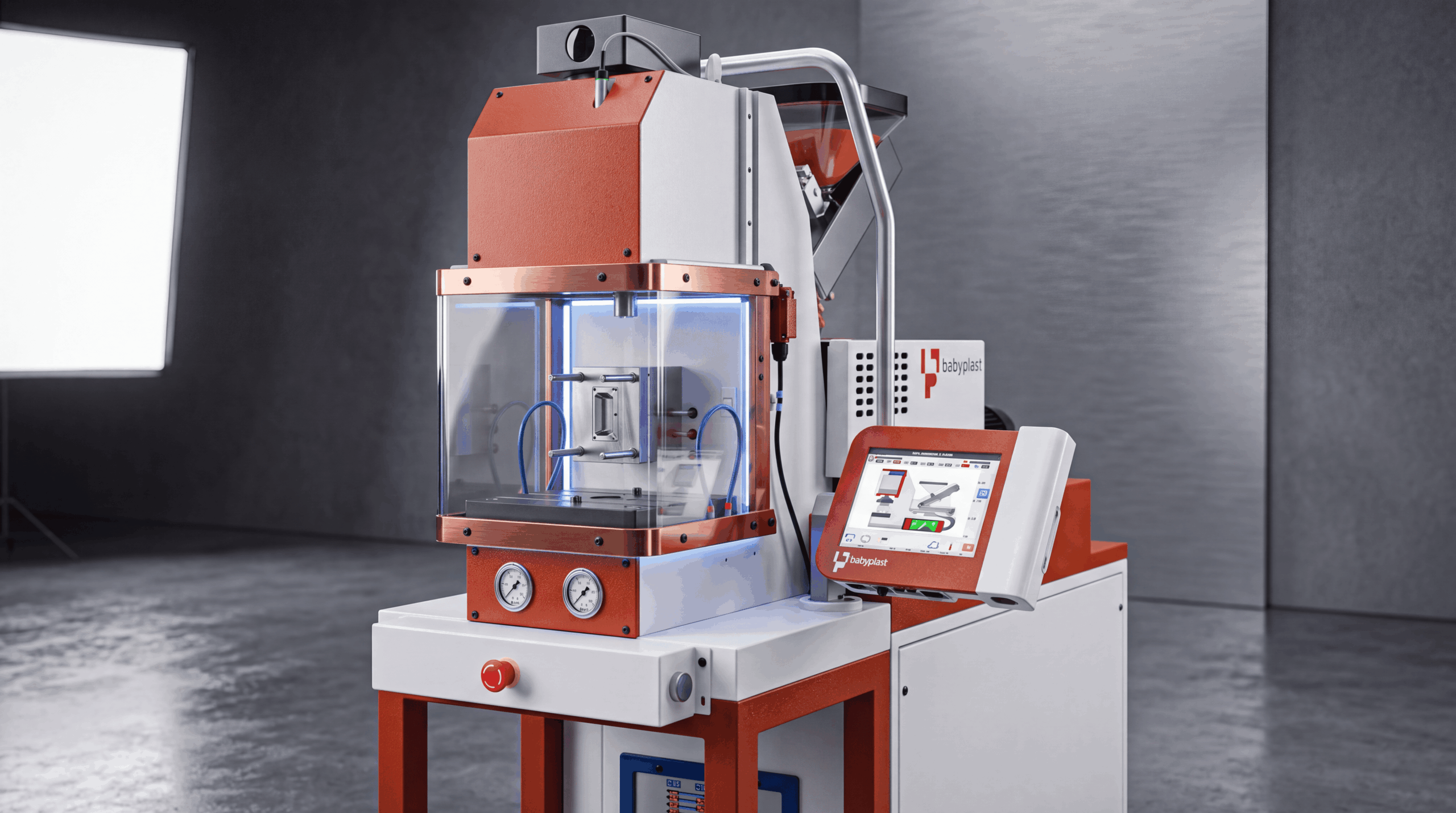
Compact injection moulding machines can support smaller mould construction where the component and production requirements allow it.
Compact platen arrangements may provide an opportunity to develop tooling around smaller components rather than using a conventional full-size mould arrangement.
Using Machine Platens as Mould Bolsters
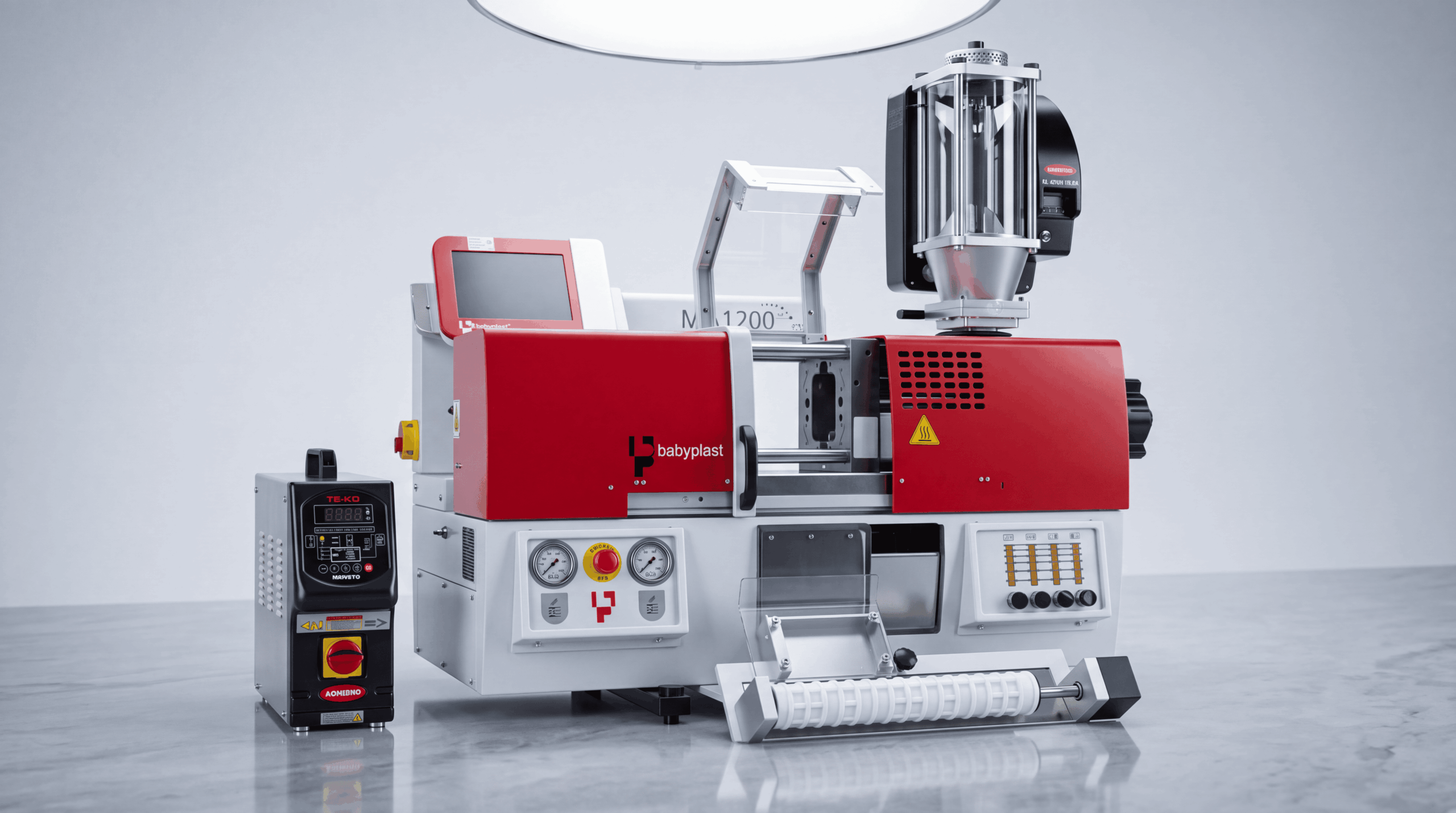
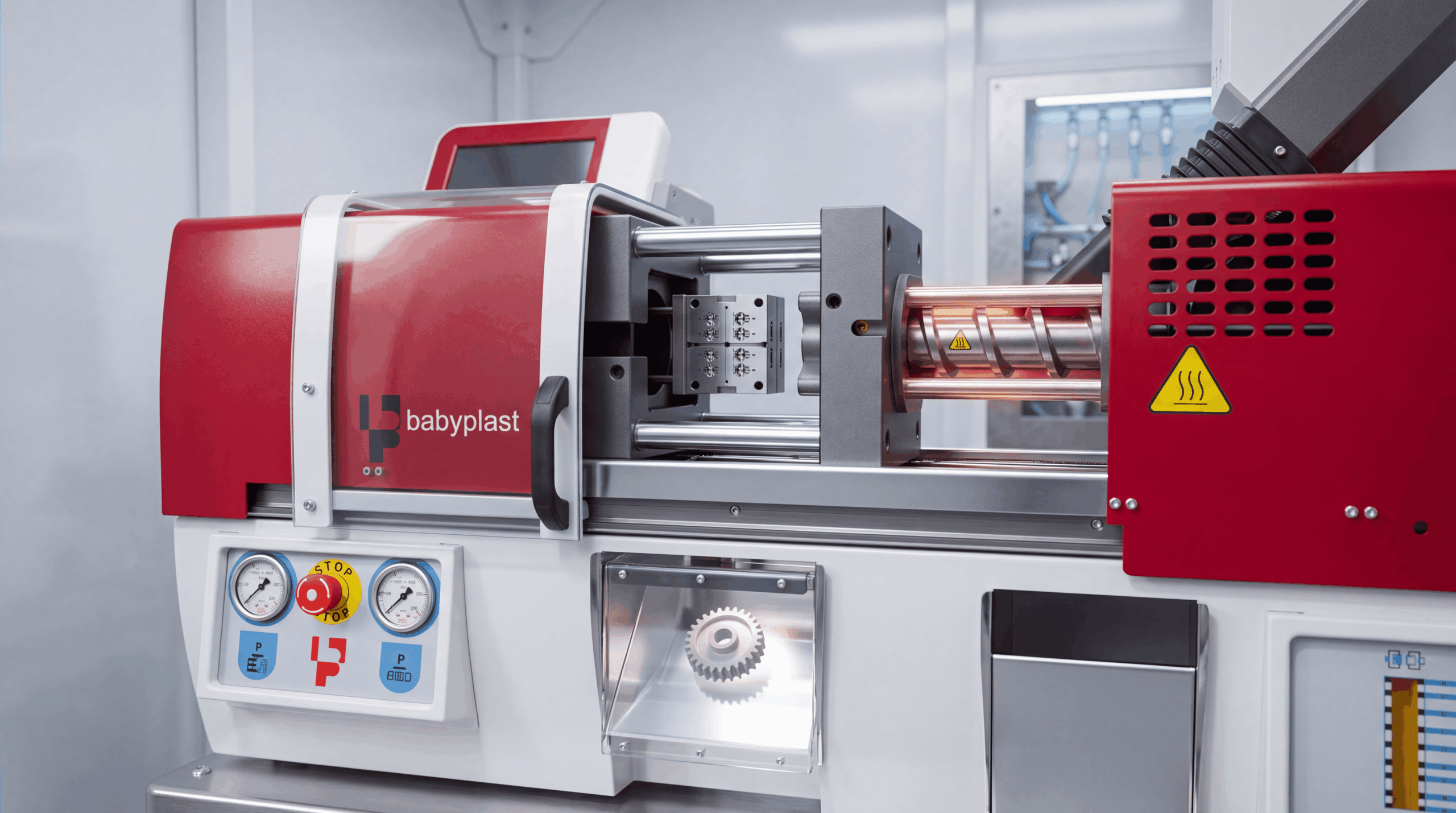
On Babyplast horizontal machines, the machine platens can act as mould bolsters.
This allows the tooling concept to focus on the cavity plates and the features needed to produce the component.
Tool design must still account for the complete moulding process, including cooling, ejection, hot runners and maintenance.
The most appropriate tooling arrangement depends on the component and its manufacturing requirements.
5. A Dedicated Production Cell for Precision Components
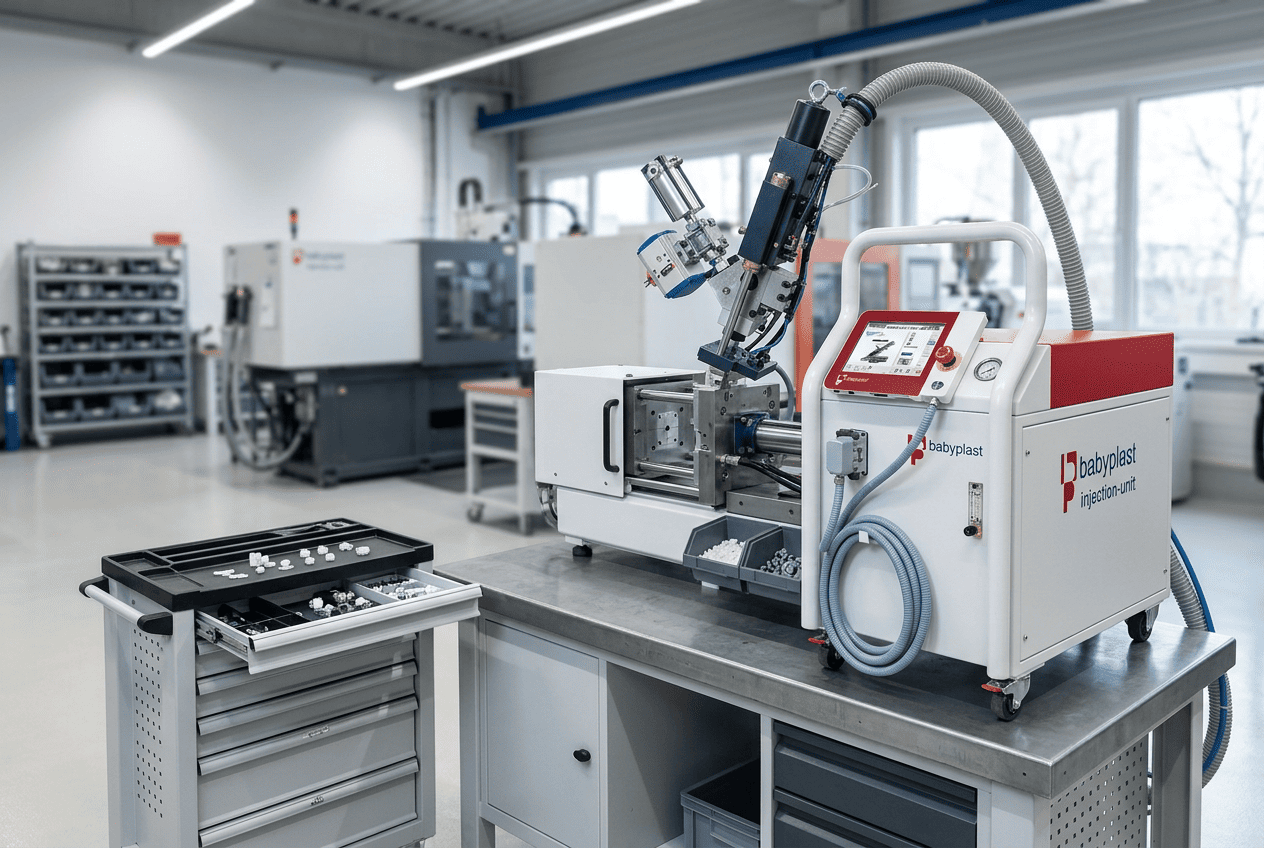
A compact injection moulding machine can be allocated to a particular product family, specialist material or development programme.
This can provide a dedicated production platform without occupying a larger moulding press.
Reducing Production Scheduling Conflicts
Using a compact machine for suitable small components may reduce scheduling conflicts with larger production equipment.
It can also simplify process control where the cell is dedicated to a particular component or manufacturing requirement.
Supporting Specialist Small-Part Applications
A dedicated compact moulding cell can be considered for applications where the material, tooling and production process benefit from a focused machine arrangement.
Suitability should be assessed against the intended duty and the complete manufacturing sequence.
What Are the Limitations of Compact Injection Moulding Machines?
Compact injection moulding equipment is not suitable for every application.
Although a smaller machine can offer advantages, it must still meet the technical requirements of the component and tooling.
Important limitations include:
- Mould dimensions: The tool must fit within the available machine arrangement.
- Clamping force: The machine must provide the force required by the moulding process.
- Shot volume: The injection unit must accommodate the component, runner and sprue requirements.
- Opening stroke: The available mould movement must be suitable for the component and tooling.
- Automation space: The production cell must accommodate any required handling or automation equipment.
A compact machine should be selected because the application fits its capabilities, not simply because the machine has an attractive footprint.
Are Compact Injection Moulding Machines Only Used for Prototyping?
No. Compact injection moulding machines are not limited to prototyping or development work.
When correctly specified, compact equipment can support development, low-volume manufacturing or continuous production.
The intended use should be considered during the selection and design of the production cell.
Development and Prototype Applications
Compact injection moulding machines can provide a dedicated platform for product development and small-part manufacturing trials.
The tooling, material and process should be matched to the requirements of the development application.
Low-Volume and Continuous Production
Compact machines can also be used for ongoing manufacturing where the application fits the equipment’s operating capabilities.
The tool, material supply, quality controls and downstream handling should be designed for the intended production duty.
Choosing the Right Compact Injection Moulding Machine
Choosing a compact injection moulding machine requires a complete assessment of the component, tooling and production requirements.
Factors to consider include the material, required shot volume, mould dimensions, clamping force and expected production quantity.
The smaller machine should offer a practical advantage while still meeting the manufacturing and quality requirements of the finished component.
Compact Injection Moulding Machines from Babyplast UK
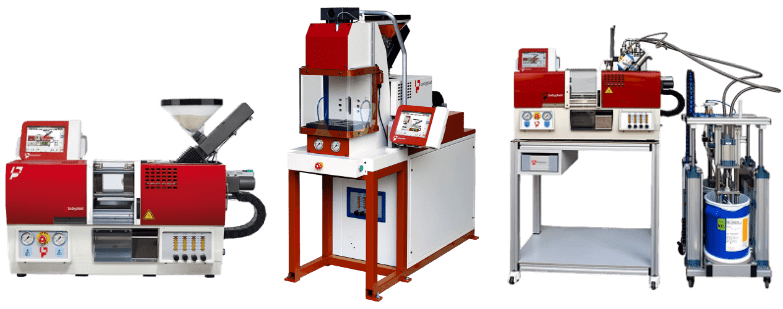
Babyplast UK supplies compact 6- and 10-ton micro injection moulding machines for production and development applications.
These machines provide options for manufacturing small precision components where the shot size, tool and clamping requirements are appropriate.
Share the component, material, tool envelope and forecast volume with the Babyplast UK team to confirm whether a compact machine offers a genuine operational and commercial advantage.
Explore the Babyplast 6/12 Standard Series compact injection moulding machines to learn more about the available equipment.